
How to Layer Knitwear Without Looking Bulky
Knitwear and layering were made for each other. A perfectly styled layered knit outfit can look chic, considered, and even more polished than a single-piece ensemble. The trouble is that layering knitwear badly is one of the fastest ways to look shapeless — like you simply put on everything you own and hoped for the best.
The good news: avoiding bulk is mostly a matter of fabric choices and proportions. Master a few principles and layering knitwear becomes one of the most enjoyable parts of getting dressed.
Start With the Right Base Layer
The foundation of a layered knitwear look is what sits closest to your body. Choose something slim and fitted — a fine-rib turtleneck, a silk or satin blouse, a lightweight fitted long-sleeve top. The thinner and more fitted your base layer, the more room you have for texture and interest in the outer layers.
Avoid wearing two medium-weight knits directly against each other. This is the most common cause of unwanted bulk. If you're layering a cardigan over a sweater, the sweater underneath should be considerably finer than the cardigan on top.
The Fine-Over-Chunky Rule
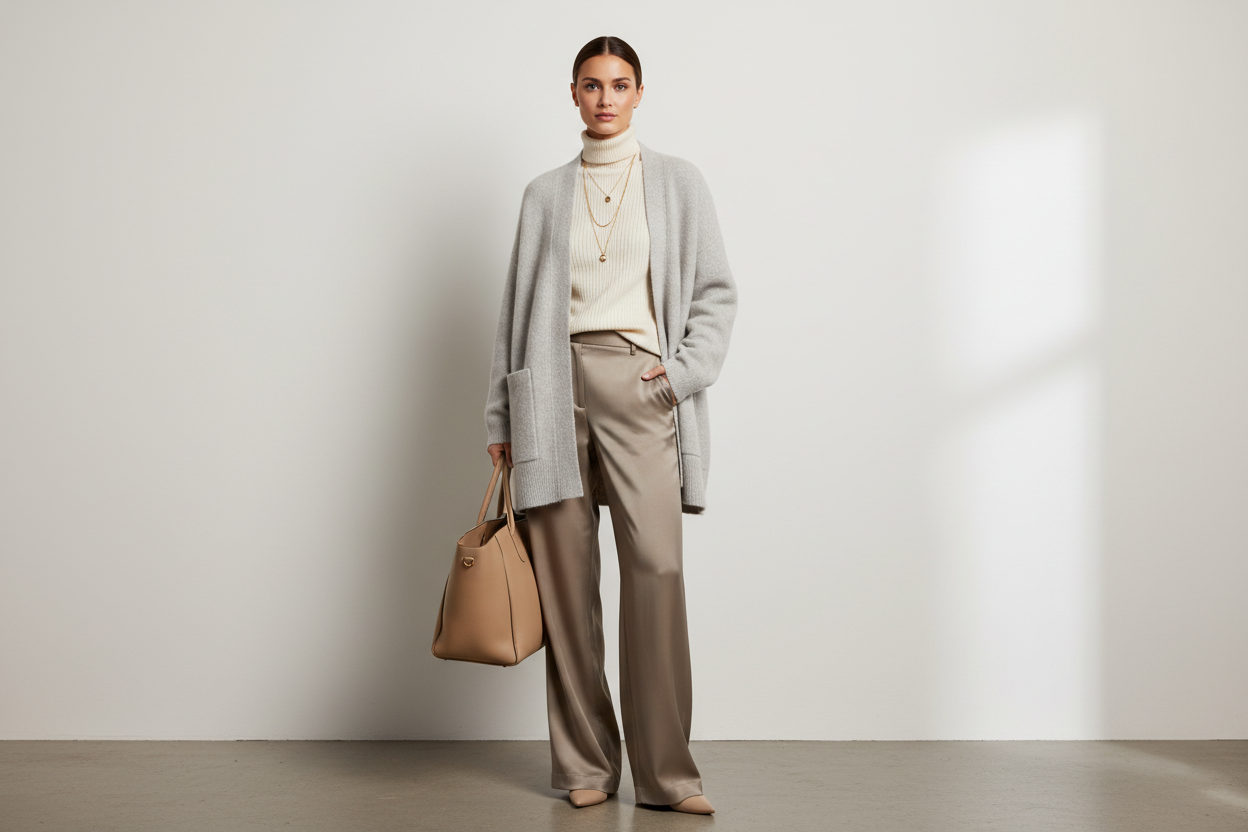
The most reliable layering formula is to put finer, lighter knits closest to the body and heavier textures on top. A fine merino turtleneck under an oversized cable-knit cardigan works. A chunky ribbed sweater under a fitted blazer does not — the layers compete rather than complement.
Use Length and Proportion Intentionally
A classic formula: a cropped or tucked inner layer beneath a longer outer layer. This creates clear visual hierarchy — you can see each piece distinctly, rather than everything merging into an indistinct mass.
Try: a cropped fine-knit sweater with high-waisted wide-leg trousers and a longline cardigan over the top. The cardigan creates length; the cropped sweater creates waist definition; the wide-leg trouser grounds the outfit.
The Half-Tuck
Tucking the front of a sweater or shirt into the waistband while leaving the back untucked creates waist definition without losing the relaxed quality of the knit. It works particularly well with fine-knit sweaters tucked into high-waisted trousers or knit skirts.
Play With Necklines for Visual Interest
One of the most elegant layering effects is the visible neckline of one piece above another. A fine turtleneck peeking above a V-neck sweater. A shirt collar framing the neckline of a crewneck. These details add intentionality and polish without any physical bulk.
Monochromatic Layering
One of the simplest ways to layer knitwear without looking chaotic: stay within a single color family. Cream over ivory over white, or various depths of camel, creates a dimensional, sophisticated look. The eye reads the outfit as a unified whole rather than competing elements.
Frequently Asked Questions
Can you layer two knit sweaters together?
Yes — but only if they have significantly different weights and textures. A fine-gauge merino piece worn under a heavier, open-weave cardigan can work beautifully. The issue arises when both pieces are similar in weight, which creates bulk and a strained fit.
What to wear under a knit sweater without adding bulk?
Fine-gauge base layers in silk, satin, or lightweight jersey are the best options. A silk camisole, a thin turtleneck, or a fitted long-sleeve thermal will add warmth and layering interest without visible bulk.
How do you layer knitwear in a professional setting?
Layer a fine-knit turtleneck under a structured blazer or tailored jacket. Alternatively, a fitted fine-knit sweater under a well-cut suit jacket creates a considered alternative to a traditional shirt combination. Keep layers streamlined and fitted.
Does layering knitwear work in warmer months?
Absolutely. In spring and summer, opt for very lightweight, open-weave, or linen-blend knits. A fine cotton or linen knit cardigan worn over a slip dress is a classic warm-weather layering formula.
Browse ELNOVÉ's collection of knit cardigans and sweaters designed for versatile, season-spanning styling.
Related Reading
What to Wear Under a Knit Sweater: The Complete Layering Guide