


How to Store Sweaters in Summer: The Complete Guide
Short answer: To store sweaters in summer correctly, wash every piece first, fold them flat (never hang), and place them in a breathable cotton bag or lidded fabric box in a cool, dark, dry spot. Add cedar blocks for moth protection. Skip plastic vacuum bags for.
To store sweaters in summer correctly, wash every piece first, fold them flat (never hang), and place them in a breathable cotton bag or lidded fabric box in a cool, dark, dry spot. Add cedar blocks for moth protection. Skip plastic vacuum bags for long stretches. Lavender smells lovely but it will not save your knitwear on its own.
How to store sweaters in summer: the short answer
Clean every sweater before it goes away, even ones that look unworn. Fold them flat, never hang. Use breathable storage, not sealed plastic. Keep the box somewhere cool, dark, and dry, ideally under 21°C with humidity below 55%. Refresh cedar every few months. That is the whole method, and it works on cashmere, merino, cotton, and quality synthetics alike.
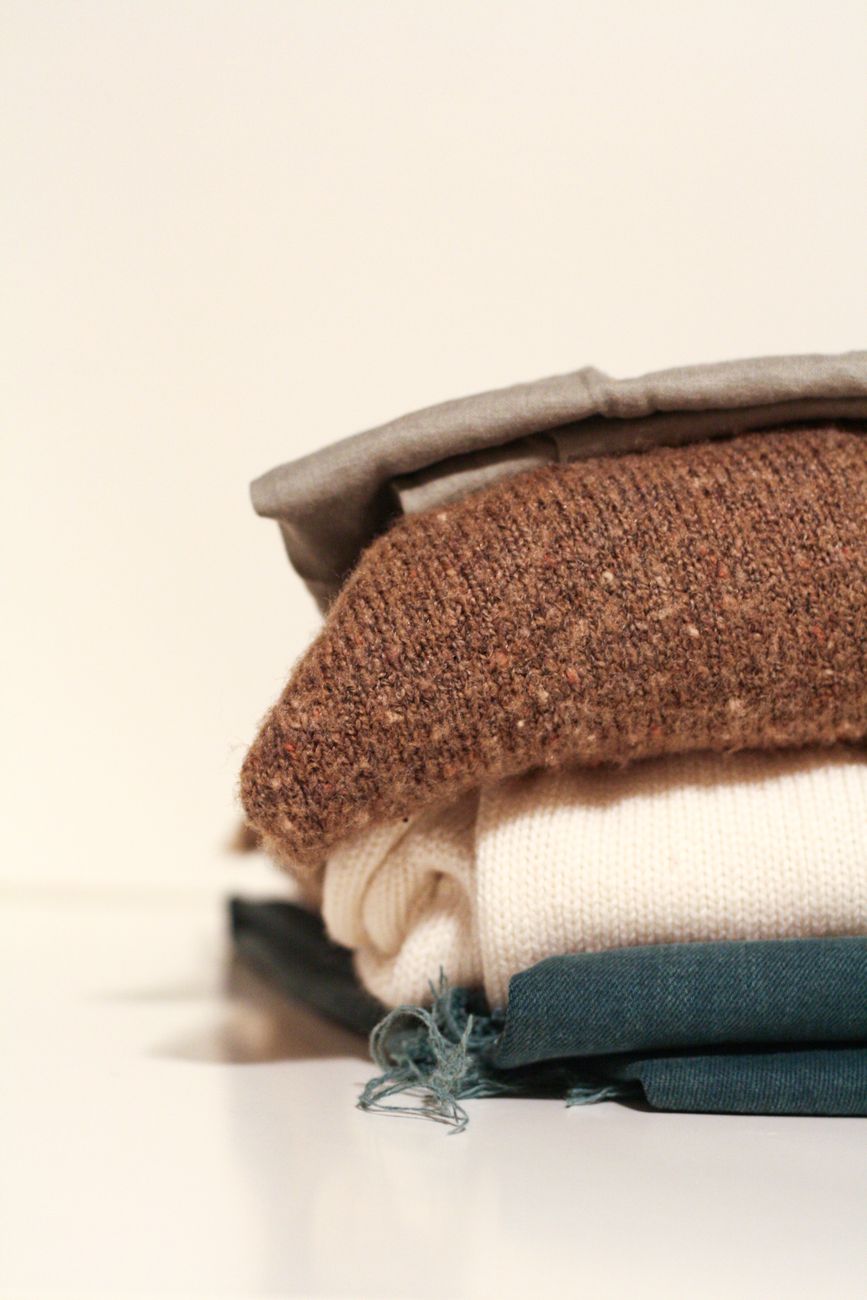
Photo by Kate L on Pexels
Why summer is the dangerous season for knitwear
Most damage to sweaters happens between June and September, while you are not even looking at them. Three things go to work in your closet: clothes moths laying eggs in protein fibres, mildew settling into damp folds, and gravity stretching out anything you forgot on a hanger.
Clothes moths are not picky. They love cashmere and merino, but they will happily chew wool blends and even cotton if there are food stains or sweat on the fabric. The adult moth you sometimes spot is harmless. The larvae are what eat the holes, and they hatch in warm, dark, undisturbed spaces, which is exactly what an off-season storage box becomes.
Mildew is the second silent enemy. A sweater folded away with even slight residual moisture, or stored somewhere humid like a basement, can develop musty smells and grey spots within weeks. Once mildew sets into knit yarn, the smell rarely comes out fully.
The wash-before-storing rule (non-negotiable)
This is the step most people skip and the one that matters most. Even a sweater you wore once carries body oils, traces of perfume, deodorant, and sometimes food. Moths are attracted to keratin, the protein in your hair and skin, and they lay eggs in fabric that smells like a meal. Pristine-looking knitwear can be the most appetising of all.
Hand wash wool and cashmere in cool water with a gentle wool detergent. Lay flat to dry completely, which usually means 24 to 48 hours. For structured pieces or anything labelled dry clean only, take them to a cleaner now, not in September when everyone else does. Make sure the plastic sleeve comes off before storage. Plastic traps chemical residue from the cleaning solvents and can yellow the fibre over time.
The lavender myth, the cedar truth, and what actually works
Lavender sachets have become shorthand for proper closet care, but the science is less romantic. Lavender oil has some repellent effect on adult moths, mostly through scent. It does not kill eggs and it does not deter larvae once they are hatched. Within a few weeks the volatile oils fade, and you are left with a pretty sachet that is essentially decorative.
Cedar wood works better, but only when it is fresh. The aromatic oils in cedar interfere with moth pheromones and discourage egg-laying. After three to six months, cedar blocks lose their potency. Sand them lightly with fine paper or replace them. Cedar chips in muslin bags last about the same time.
The most effective single thing you can do is store clean sweaters in a sealed but breathable container. Cotton garment bags, canvas storage boxes, and acid-free tissue between folds outperform any herb or oil.
| Method | Effective against moths | Best for | Lasts |
|---|---|---|---|
| Cedar blocks (fresh) | Good | Wool, cashmere, merino | 3-6 months |
| Lavender sachets | Mild scent deterrent only | Adding pleasant smell | 4-8 weeks |
| Airtight container with clean sweater | Excellent | All knitwear | Full season |
| Cotton garment bag | Good when sealed | Cashmere, fine merino | Full season |
| Plastic vacuum bag | Excellent short term | Emergency space-saving only | 1-2 months max |
| Open shelf in closet | Poor | Not recommended off-season | Not advised |
Folding, stacking, and the shoulder problem
Never hang a sweater for storage, and ideally never hang one at all. Knit fabric has memory. Leave it on a hanger for three months and the shoulders develop two small points that no amount of steaming will fully erase. Longline cardigans and heavier autumn and winter knits are especially vulnerable.
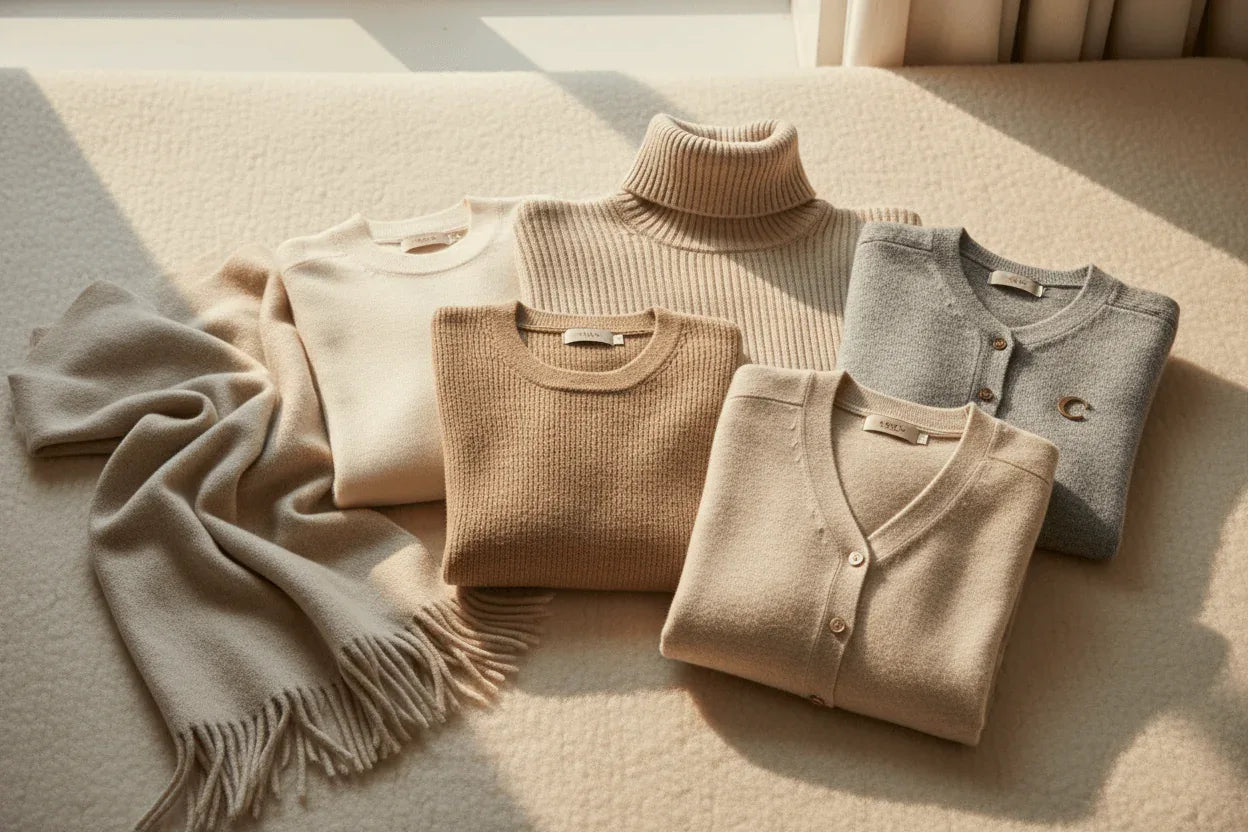
Fold sweaters in thirds vertically, then in half horizontally. For very fine knits, place a sheet of acid-free tissue between folds to prevent permanent crease lines. Stack heavier pieces like cable knits and chunky cardigans at the bottom of the box, lighter pieces on top. If you are storing favourites from your best sellers rotation, give them their own breathable bag so they are easy to find first when the temperature drops.

Photo by Nati on Pexels
Where to put the box, and what to check in autumn
Location matters more than people realise. Attics get too hot and humid in summer. Basements stay damp. Garages swing through every kind of weather. The best storage is inside your living space: a linen closet, the top of a wardrobe, or a flat under-bed drawer. Pieces from your knit sets and cardigans collections deserve this prime real estate, since they are usually the most expensive per piece.
When autumn arrives, do not just open the box and start wearing. Take everything out, give each sweater a gentle shake, and let them air for a few hours. Look for any signs of moth activity (small holes, fine webbing, or pale grains that look like sand). If you see any, freeze the affected piece in a sealed bag for 72 hours to kill any remaining eggs or larvae, then wash again before wearing.
A simple summer storage checklist
- Wash or dry clean every sweater, even the ones you barely wore
- Dry completely flat for at least 24 hours before folding
- Fold, never hang, and use acid-free tissue for fine knits
- Store in cotton bags or fabric boxes, not sealed plastic for long stretches
- Add fresh cedar blocks; treat lavender as a bonus, not a strategy
- Keep boxes in cool, dark, dry living spaces under 21°C
- Check once mid-summer for any signs of damp or moths
- Air everything for a few hours before wearing again in autumn
Done well, off-season storage is the difference between a sweater that lasts two winters and one that lasts a decade. When the cooler months come around, your favourite cable knits, cashmere blends, and longline cardigans should come out looking exactly as you left them. Explore the current edit when you are ready to add something new alongside them.
Frequently Asked Questions
Should I wash sweaters before storing them for summer?
Yes, always. Invisible body oils, perfume residue, and food particles attract moths and cause yellowing over months. Even sweaters that look clean must be laundered or dry cleaned before they go into storage.
Does lavender actually repel moths?
Lavender repels some adult moths through scent, but it does not kill eggs or larvae, which is the stage that eats your knitwear. Treat lavender as a pleasant addition, not your primary defence. Cedar and airtight containers do the real work.
Can I store sweaters in plastic vacuum bags?
Short term yes, long term no. Compressing knitwear for months crushes the loft of the yarn and can set permanent creases. Natural fibres also need a small amount of air circulation. Use breathable cotton bags or fabric storage boxes instead.
How do I store sweaters without stretching the shoulders?
Never hang knitwear. Always fold sweaters flat or roll them loosely. Hanging pulls the shoulders into points and stretches the neckline. Stack heavier knits at the bottom of your storage box and lighter pieces on top.
What temperature and humidity is best for sweater storage?
Aim for cool, dark, and dry: under 21°C with humidity below 55%. Avoid attics, basements, and garages where heat and damp swing widely. A linen closet or under-bed drawer in your living space is almost always the best spot.


,%20and%20place%20them%20in%20a%20breathable%20cotton%20bag%20or%20lidded%20fabric%20box%20in%20a%20cool,%20dark,%20dry%20spot.%20A...)