
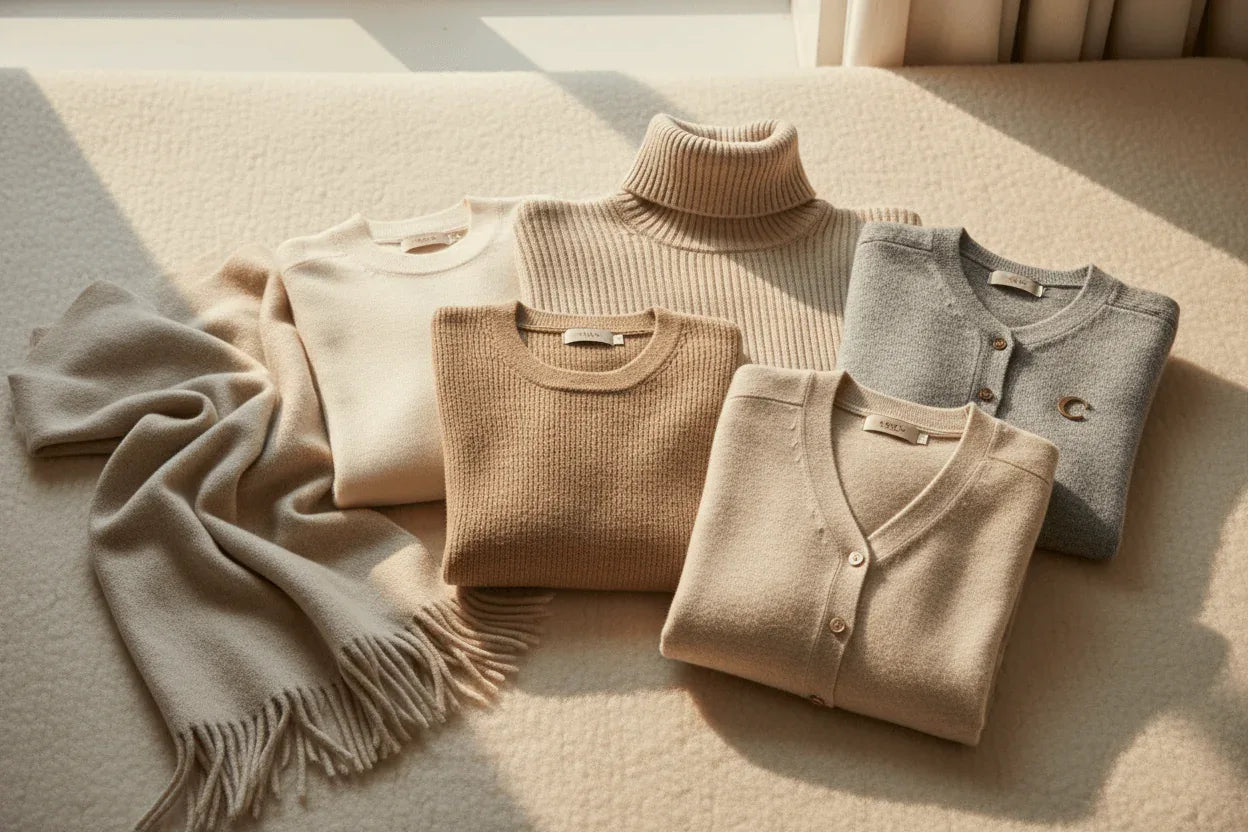

Article: What's the Best Way to Store Designer Knitwear Between Seasons?
What's the Best Way to Store Designer Knitwear Between Seasons?
Short answer: The best way to store designer knitwear between seasons is to clean every piece first, fold (never hang) along the seam lines, layer with acid-free tissue, and place in a breathable cotton storage bag or lidded box with cedar. Keep the storage spot.
The best way to store designer knitwear between seasons is to clean every piece first, fold (never hang) along the seam lines, layer with acid-free tissue, and place in a breathable cotton storage bag or lidded box with cedar. Keep the storage spot cool, dark and dry, and check on the pieces once mid-season.
What's the Best Way to Store Designer Knitwear Between Seasons?
Start by treating storage as the final step in the wash cycle, not a separate task. Clean every piece, fold it flat, separate it from neighbours with acid-free tissue, and keep it in a breathable container away from light, heat and damp. That is the whole method. Everything below is detail.
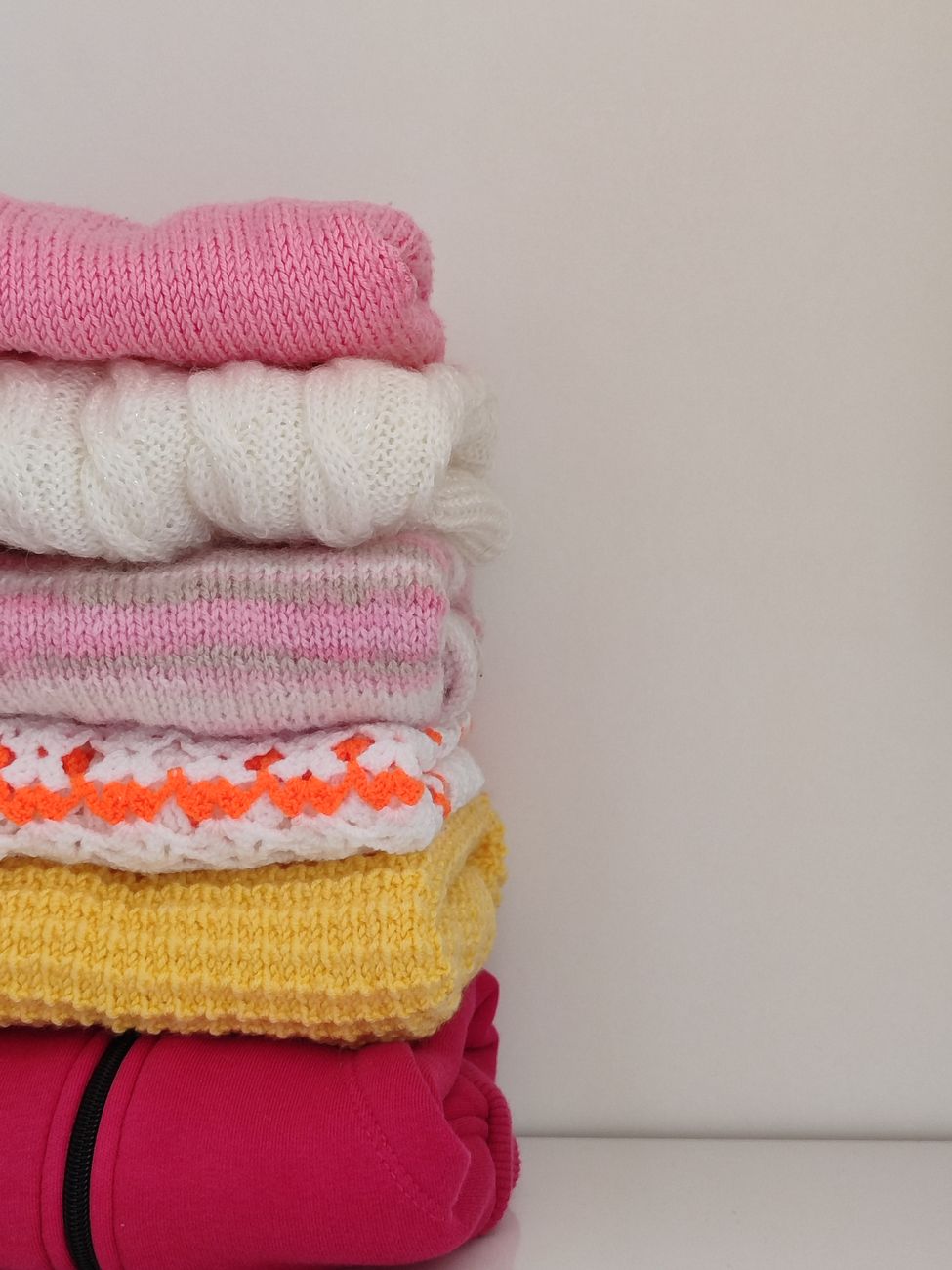
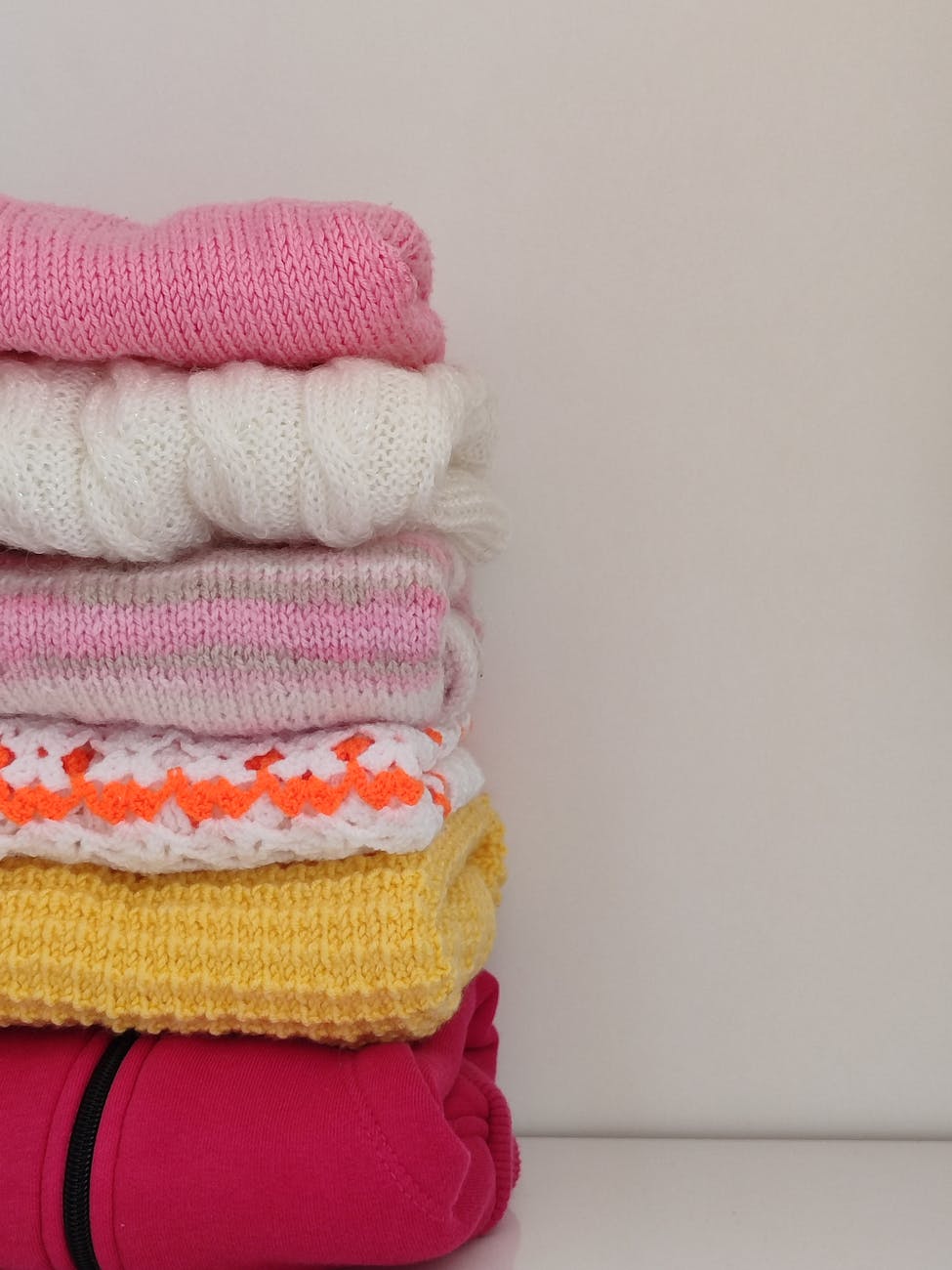
Photo by Nur Tok on Pexels
Clean Before You Store, Always
This is the rule that protects everything else. Moths and carpet beetles do not eat clean wool or cashmere. They eat the invisible residue we leave on it: body oils, perfume, hair product, a splash of coffee from three months ago. Storing a worn piece is an open invitation.
Wash heavier cable and 7-gauge pieces by hand in cool water with a wool-safe detergent. Send fine cashmere and silk-blend openwork to a trusted dry-cleaner who uses fresh solvent. Lay everything flat to dry on a clean towel, reshape while damp, and only fold once the piece is completely dry. Damp wool stored in a sealed container will mildew within weeks.
Fold, Never Hang
Hanging is the single fastest way to ruin a good knit. Gravity pulls the shoulders out of shape, the hanger leaves dimples, and the weight of the yarn stretches the body. Even a padded hanger does not save a longline cardigan or a chunky cable sweater.
Fold along the existing seam lines. For most pieces: arms folded inward across the chest, then a single fold in half. For longline pieces and knit dresses, add a second fold lower down. Slip a sheet of acid-free tissue inside the fold to soften the crease line. Stack heaviest pieces at the bottom, lightest at the top, so the lower layers are not crushed.
Choose the Right Container and Spot
Skip the plastic vacuum bag. Compression breaks down the loose-spun structure of luxury yarn and creates permanent flat patches in bouclé, cable and waffle knits. Plastic also traps any residual moisture against the fibre.
Use one of these three options instead:
- Breathable cotton or linen storage bags (best for individual heavy pieces)
- Acid-free archival boxes with a loose lid (best for stacked sets)
- Drawer storage with cedar inserts (best for pieces you may dip into mid-season)
Place containers in a cool, dark, dry spot. Bedroom wardrobe interiors work well. Attics, garages and basements do not: temperature swings and humidity are far more destructive than dust.
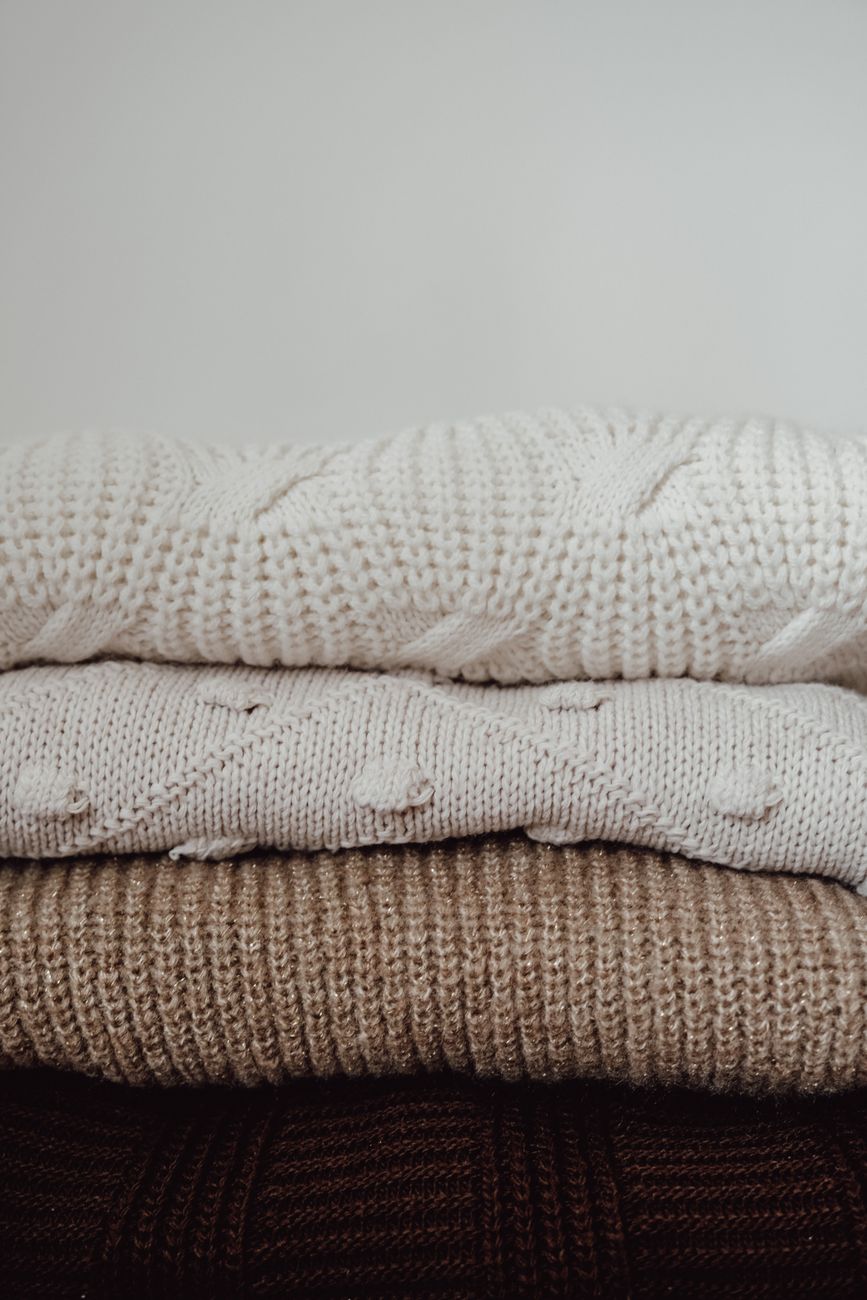
Photo by Büşra İnce on Pexels
Storage Method by Knit Type
Different constructions need slightly different handling. Heavier designer sweaters tolerate stacking, while delicate openwork pieces prefer their own space.
| Knit Type | Best Container | Tissue Layers | Moth Protection | Check Every |
|---|---|---|---|---|
| Cable and 7-gauge sweaters | Cotton bag or archival box | One between each piece | Cedar block | 3 months |
| Cashmere and fine merino | Archival box, single layer | Tissue inside each fold | Lavender sachet + cedar | 2 months |
| Bouclé and textured knits | Cotton bag, no compression | Loose tissue around piece | Cedar block | 3 months |
| Openwork and lightweight | Drawer with cedar insert | Tissue inside fold only | Lavender sachet | 3 months |
| Knit dresses and longline cardigans | Flat archival box, separate | Tissue at each fold line | Cedar block | 2 months |
| Matching knit sets | Together, in one bag | Between top and bottom | Cedar block | 3 months |
Cedar blocks need a light sanding every three months to release fresh oil. Lavender sachets need replacing yearly. Both deter moths through scent, not toxicity, so the moment the smell fades they stop working.
Bringing Knitwear Back Out
Resist the urge to pull a piece straight from the box and put it on. Six months of compression, however gentle, leaves fold lines and flattened loft that need time to recover.
Lay the piece flat for 24 hours so the fibre can breathe and the folds relax. Steam lightly from 15cm away, never iron directly. Hang briefly on a wide padded hanger (under an hour) only if a stubborn crease remains. Pilling that appears after storage is normal: friction inside the fold lifts the shorter fibres. A fabric comb or a sweater stone removes it in minutes.
Inspect the piece for any small holes or thin spots before wearing. Catch a snag early and a single stitch repair is invisible. Catch it after a wear and the hole has usually doubled.
A Final Word on the Off-Season
The pieces you store well are the pieces you keep for a decade. Designer knitwear is built to last that long, and proper between-season storage is the difference between owning a wardrobe and slowly replacing one. When the season turns again, browse the new arrivals in cardigans and knit sets alongside the favourites you just unpacked, and let the rotation begin.
Frequently Asked Questions
Should designer knitwear be stored folded or hung?
Always folded. Hangers stretch the shoulders and distort the knit structure, especially in heavier cable and 7-gauge pieces. Fold along the natural seam lines and stack heaviest at the bottom.
How do I protect stored knitwear from moths?
Wash or dry-clean every piece before storing (moths feed on skin oils and food traces, not clean fibre), then add cedar blocks or lavender sachets. Refresh the cedar by sanding it lightly every three months.
Is vacuum sealing safe for luxury knits?
No. Compression flattens loft, breaks down loose-spun yarn structure and creases bouclé and cable knits permanently. Use breathable cotton storage bags or acid-free tissue and a lidded box instead.
Where should I store knitwear in a small apartment?
Under-bed boxes work well if the space is dry and dark. Avoid attics (heat), basements (damp) and the top of wardrobes near downlights. Stable temperature matters more than square footage.
How do I refresh knitwear after months in storage?
Air the piece flat for 24 hours, steam lightly from 15cm away (never iron), then leave to rest overnight before wearing. Pilling that appears is normal post-storage and lifts off with a fabric comb.

%20along%20the%20seam%20lines,%20layer%20with%20acid-free%20tissue,%20and%20place%20in%20a%20breathable%20c...)