
Lightweight Knits: Your Guide to Spring and Summer Style
There's a common misconception that knitwear belongs exclusively to the cooler months. In reality, the right knit piece can be your most versatile warm-weather companion: offering structure, texture, and effortless polish that lighter fabrics sometimes lack. Here's how to embrace knitwear when the temperature rises.
Why Knitwear Works in Warm Weather
Not all knits are created equal. While chunky cable knits and heavy wool blends are best saved for autumn and winter, lighter constructions: think fine-gauge cotton, open-stitch patterns, and breathable blends: are designed to move with you through spring and summer. The natural drape of quality knitwear creates clean silhouettes that hold their shape without feeling restrictive.
Spring Essentials: The Art of Layering Light
Spring is the season of in-between: mornings that call for a layer, afternoons that don't. This is where lightweight knits truly excel.
Key pieces to reach for:
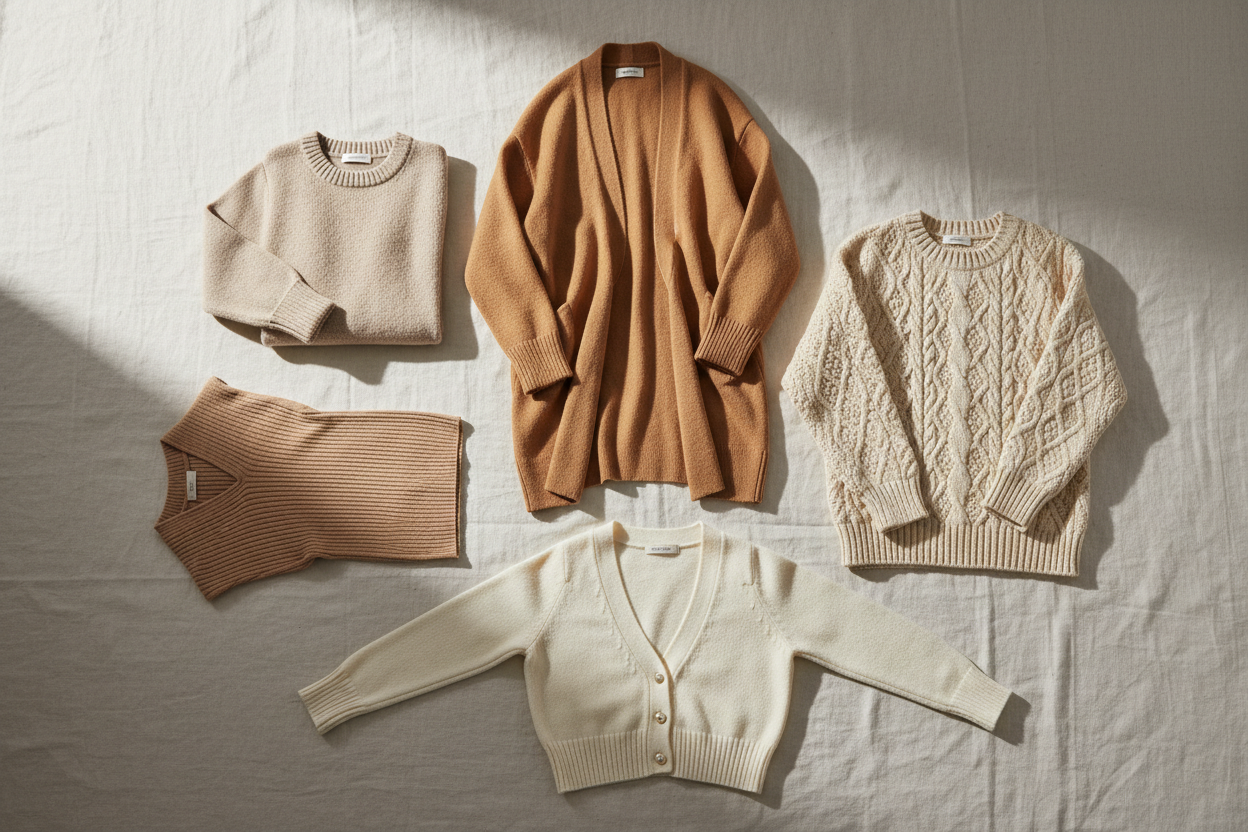
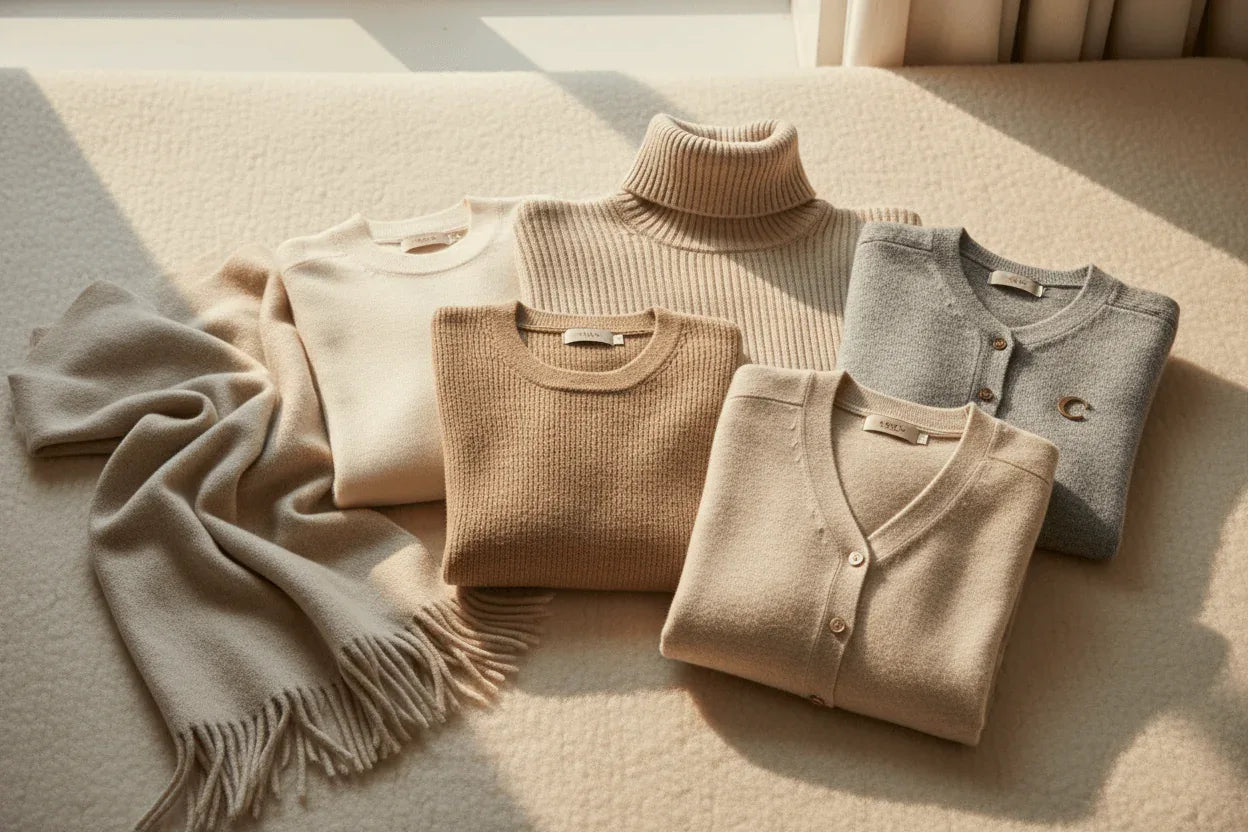
- A fine-knit cardigan: draped over a slip dress or paired with tailored trousers, it bridges the gap between polished and relaxed
- A cropped knit vest: layered over a collared shirt for a modern, structured look
- Pointelle or openwork tops: the subtle perforated patterns add visual interest while allowing airflow
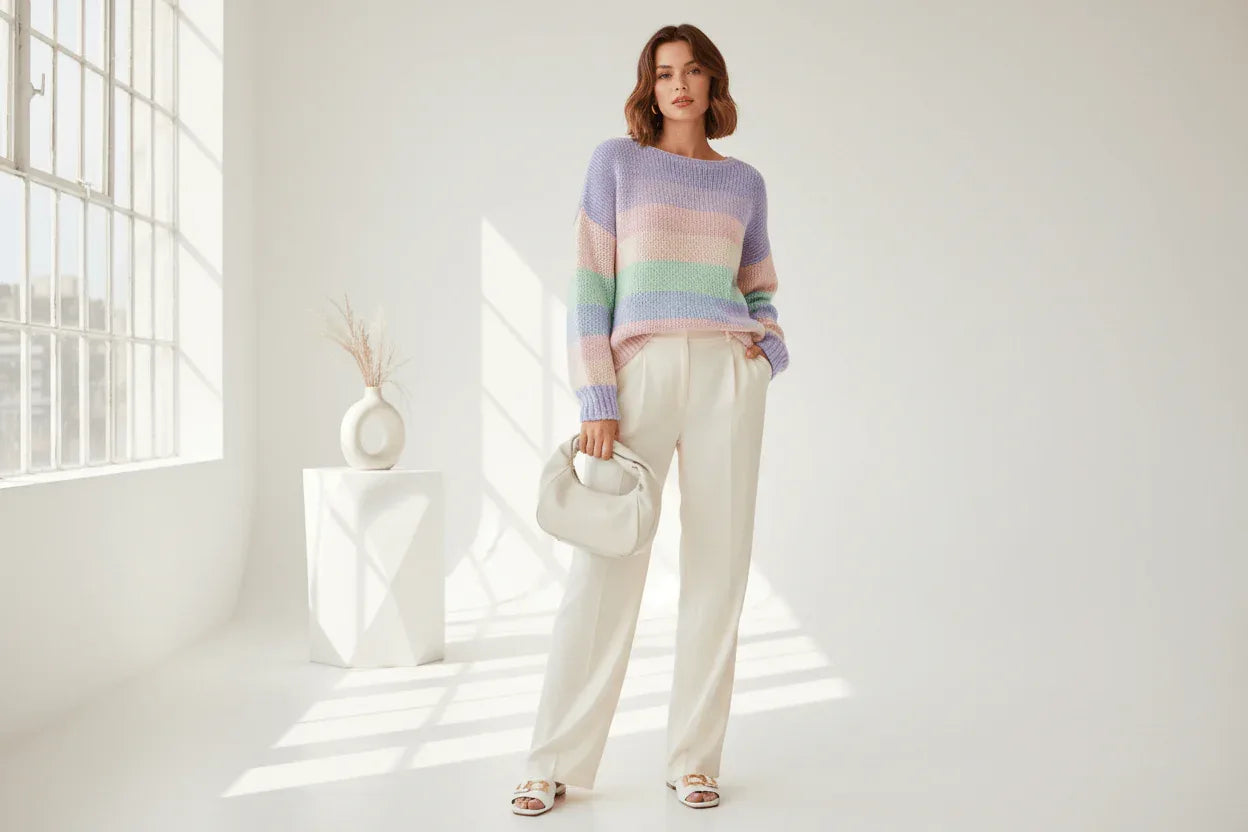
Styling tip: Stick to a tonal palette: soft beiges, ivory, and muted pastels: for a cohesive spring look that feels intentional without trying too hard.
Summer Knits: Cool, Refined, Unexpected
Summer knitwear is about choosing pieces that breathe. Crochet cover-ups, sleeveless knit tanks, and halter-neck knit dresses work beautifully because they combine the relaxed ease of summer with the refined texture of knitwear.
Styling tip: A fitted ribbed knit top with wide-leg linen trousers is one of the most effortlessly chic summer combinations. The structure of the knit balances the fluidity of the linen, creating a look that moves from a morning market to an evening terrace without missing a beat.
For beach-to-dinner transitions, a crochet or open-knit cover-up over a simple dress lets you stay comfortable in the heat while still looking put-together when you step off the sand.
Fabric Matters: What to Look For
The secret to warm-weather knitwear is in the yarn. Look for:
- Cotton and cotton blends: naturally breathable and lightweight
- Fine-gauge knits: thinner construction means less bulk and better airflow
- Open-stitch or crochet patterns: the gaps in the weave create natural ventilation
- Light colors: whites, creams, and soft neutrals reflect heat rather than absorbing it
The Knit Constructions That Keep You Cool
Not all knits are warm. The constructions that work in spring and summer share a structural logic: they let air move. Open-stitch knits create deliberate gaps between loops, so the fabric breathes rather than traps heat. Crochet-effect panels take this further, with wide open cells that sit more like a net than a solid fabric. Waffle-knit structures press deep squares into the surface, reducing the total area in contact with your skin. Each of these constructions is cool because of how it was made, not because of which fibre was used.
Ladder-stitch knits create long vertical runs of open space, giving a graphic quality that reads as intentional rather than casual. Fine-gauge ribbed knits compress into a close fit but have enough stretch and breathability at 12 to 16 gauge to work on warm days when paired with something underneath. If you see a knit top described as "featherweight" or "summer-weight", look for gauge numbers above 10 and construction types that include open-work or contrast-stitch details.
The pieces to avoid in heat are dense cable-knit panels, 5 to 7-gauge chunky knits, and any double-knit construction. These trap air rather than release it and will feel oppressive in temperatures above 20C.
Colour and Texture Direction for Warm Months
Spring and summer knitwear earns its place through lightness, in weight, in colour, and in silhouette. Soft neutrals, faded naturals, and dusty tones read as warm-weather appropriate in a way that saturated jewel tones often do not. An ivory waffle-knit top or a sand-coloured open-stitch cardigan sits naturally against the season. This does not mean avoiding colour: a clay-red fine-gauge ribbed set or a sage open-front cardigan are both seasonally correct if the construction is right.
Texture should feel tactile but not heavy. Waffle squares, subtle jacquard motifs, and single-stitch cable details add visual interest without adding weight. Avoid highly textured surfaces (popcorn knit, boucle, heavy bouclette) in summer because they sit thick against the skin even when the gauge is fine.
Frequently Asked Questions
- What is a waffle-knit and why does it work in summer?
- A waffle-knit is a textured construction that creates a grid of raised and recessed squares. The recessed squares reduce the amount of fabric in direct contact with your skin, which makes it feel lighter and cooler than a plain stitch knit at the same gauge.
- Can I wear a knit cardigan in summer?
- Yes. A lightweight open-front cardigan in a fine gauge, worn over a camisole or a printed dress, is a practical summer evening piece. The key is construction: open-front means no buttons trapping heat, and a fine gauge means minimal bulk.
- What makes a knit top different from a t-shirt for summer?
- The stretch and drape. A fine-gauge ribbed knit top moves with the body and skims rather than clings, which is more flattering in heat than a cotton tee that can pull or crease. It also packs without wrinkling, making it a strong travel choice.
Building Your Spring-Summer Knit Wardrobe
You don't need a complete overhaul: just a few thoughtful additions can transform your warm-weather rotation:
- One versatile cardigan in a neutral tone that works as both a layer and a light jacket
- A fitted knit top in a ribbed or fine-gauge texture for everyday polish
- A statement knit dress: whether it's a body-skimming midi or a relaxed halter style, one great knit dress carries you through the entire season
The beauty of investing in quality knitwear is that these pieces don't follow trends: they outlast them. A well-made knit in a timeless silhouette will feel just as right next spring as it does today. That's the kind of wardrobe building that makes getting dressed feel effortless, season after season. Shop our Spring & Summer Knits collection.
Related Reading
The Best Transitional Knitwear for Spring and Summer
How to Style Knitwear for Every Season
Shop Related Styles
- Fleur Halter Openwork Knit Cover-Up
- Noémie Open-Knit Beach Cover-Up Dress
- Adèle Asymmetric Sleeveless Knit Maxi Dress
- Éléonore Crochet-Lace Pointelle Knit Sweater
- Gabrielle Sleeveless V-Neck Dress
Construction Details That Keep Knitwear Comfortable in Heat
Not all lightweight knitwear is equally comfortable in warm weather. The construction method determines how the piece behaves against the skin, how it retains or releases heat, and how it reads visually.
Open-stitch constructions (ladder stitch, drop stitch, openwork) create air channels within the fabric that allow air movement without the piece looking like a vest. These constructions work well in high summer but require a layer beneath them for modesty: a fine-gauge bralette or fitted crop top underneath an open-stitch knit top resolves both the coverage and the visual questions.
Fine-rib constructions in a high natural fibre content (merino, linen blend, cotton-viscose) stay cool because they sit close to the body and release moisture through the fibre rather than trapping it. A very fine ribbed knit in a natural fibre at a relaxed fit, slightly longer than hip-length, is one of the most practical warm-weather layering pieces available. Avoid mid-gauge and chunky constructions for summer: the structure traps air and adds visual weight regardless of the fibre content. Summer knitwear lives at the fine end of the gauge range.
Caring for Lightweight Knits Year-Round
Lightweight knits require slightly different handling than heavier winter pieces because the finer gauge is more susceptible to distortion and the natural fibres used in quality warm-weather knitwear are more sensitive to agitation and heat.
Hand washing in cool water is the safest option for all fine-gauge natural fibre knits. Use a small amount of wool-safe or delicate detergent and submerge without wringing or twisting. Press the water through gently, rinse in cool water at the same temperature to avoid thermal shock to the fibres, and press out excess water by rolling the piece in a clean towel rather than squeezing. Lay flat to dry away from direct sunlight.
Machine washing on a cold delicate cycle in a mesh laundry bag is survivable for most fine-gauge cotton and cotton-blend knits, but risky for merino and linen blends without significant additional stretch in the construction. When uncertain, hand wash. The additional time is under five minutes and avoids irreversible distortion at the shoulder or hem.
Store lightweight knits folded rather than hung. Fine-gauge knitwear stretches under its own weight on a hanger, particularly at the shoulder point. Fold lengthways, smoothing the knit flat, and stack on a shelf rather than a hanger. After summer storage, refold along a different axis to prevent permanent fold lines forming at the same crease point.
Frequently Asked Questions
What is the best fabric for a summer knit top?
For warm weather, look for fine-gauge merino wool (which regulates temperature better than cotton in high heat), linen or linen-blend knits, or cotton-viscose blends in an open or fine construction. Natural fibres consistently outperform synthetic blends in warm conditions because they manage moisture through the fibre rather than trapping it against the skin.
Can you wear knitwear to the beach or on holiday?
A fine cotton or linen knit cardigan is a practical beach or resort layer: it covers without overheating, provides sun protection for the arms and shoulders, and packs without wrinkling the way woven garments do. Choose an open-front or lightweight construction in a natural fibre and a neutral colour that works over a swimsuit or under a coverup.
Is knitwear appropriate for office wear in summer?
A fine-gauge knit top in a natural fibre, worn with tailored trousers or a pencil skirt, reads professionally in most office environments. Air conditioning often makes summer knitwear practical rather than uncomfortable. Choose a neat silhouette: a fitted ribbed top or a fine-knit shell in a neutral colour works in professional contexts without reading as casual.
Featured from this guide
Shop the pieces.
Shop Lightweight Knits from ELNOVE
The ELNOVE lightweight collection is built around construction choices that work in warm weather without sacrificing the finish and quality that make knitwear worth wearing over a simple t-shirt. Every piece is chosen for its gauge, stitch structure, and drape: no chunky constructions in the spring-summer edit, no fibres that hold heat when the temperature rises. If you are building a warm-weather wardrobe from scratch, start with one fine-gauge ribbed top in a neutral, one open-front cardigan, and one waffle-knit set. These three pieces will handle most of your spring and summer styling needs.