
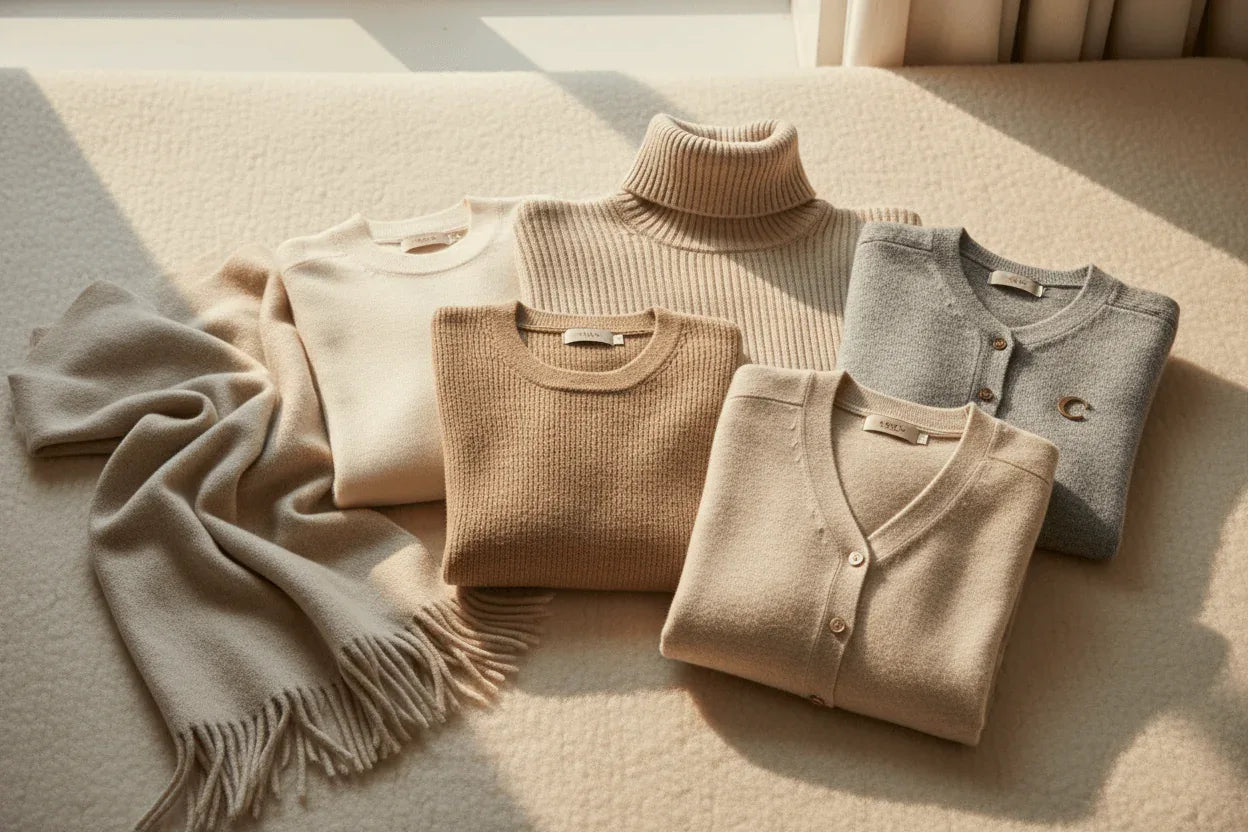


How to Store Knit Sweaters: Keep Them Perfect Season After Season
You have invested in beautiful knitwear, washed it carefully and kept it looking pristine: but poor storage can undo all of that work in a single season. Moths, stretching, creasing and moisture damage are all preventable with the right storage habits.
Whether you are putting sweaters away for the warmer months or simply organising your everyday knitwear, here is how to store knit sweaters properly so they stay perfect year after year.
The Golden Rule: Fold, Never Hang
This is the most important storage rule for knitwear. Never hang a knit sweater on a hanger. The weight of the fabric pulls downward, stretching the shoulders into unsightly hanger bumps and distorting the shape of the entire garment. This is true for all knit weights: from lightweight fine-gauge tops to chunky cable knits.
Always fold your sweaters and store them flat. If you are short on shelf space, neatly folded sweaters can be placed in drawers, storage boxes or on closet shelves.
How to Fold a Sweater Properly
A good fold prevents creases and keeps the sweater compact:
- Lay the sweater face down on a flat surface.
- Fold one arm across the back, keeping the sleeve aligned with the side of the sweater.
- Repeat with the other arm, creating a rectangle.
- Fold the sweater in half (or thirds for longer pieces) from the bottom up.
- Store with the folded edge facing up so you can identify it at a glance.
For very delicate knits, place a sheet of acid-free tissue paper between the folds to prevent creasing.
Short-Term Storage: Your Everyday Rotation
For sweaters you wear regularly throughout the season, simple shelf or drawer storage is ideal:
- Keep stacks small: no more than three or four sweaters per stack to prevent the bottom ones from being compressed.
- Rotate the stack occasionally so the same sweater is not always on the bottom.
- Allow air circulation. Do not pack sweaters too tightly in drawers. They need a little breathing room to maintain their loft and softness.
- Use shelf dividers if storing on open shelves to keep stacks neat and prevent them from toppling.
Long-Term Storage: Seasonal Put-Away
When the season changes and you are storing knitwear for several months, a few extra precautions go a long way:
1. Clean Everything First
Never store knitwear that has been worn without washing it first. Body oils, invisible food residues and perspiration attract moths and can cause staining that becomes permanent over time. Even sweaters that look and smell clean should be washed or aired thoroughly before going into storage.
2. Choose the Right Container
- Cotton garment bags or breathable fabric storage boxes are ideal. They protect against dust while allowing air to circulate.
- Avoid plastic bags and airtight containers for natural fibres. Wool and cashmere need to breathe: trapped moisture can cause mildew and a musty smell.
- Cedar storage boxes are a good investment if you have the space. Cedar naturally repels moths and absorbs moisture.
3. Add Moth Protection
Moths are the number one enemy of stored knitwear, especially anything containing wool, cashmere or other animal fibres. Protect your sweaters with:
- Cedar balls or cedar rings: natural, effective and pleasant-smelling. Replace or sand them every six months to refresh the cedar oil.
- Lavender sachets: another natural moth deterrent that keeps your storage smelling fresh.
- Moth traps (pheromone-based): useful for monitoring whether moths are present in your closet.
- Avoid mothballs (naphthalene): they are effective but leave a strong, unpleasant chemical odour that is difficult to remove from clothing.
4. Choose a Cool, Dry Location
Store your knitwear in a cool, dry, dark place. Avoid attics (too hot in summer), basements (too damp) and areas with direct sunlight (causes fading). A bedroom closet or the top shelf of a wardrobe is usually ideal.
Special Storage Tips by Fibre Type
- Cashmere: The most moth-vulnerable fibre. Always clean before storage, wrap in acid-free tissue and use cedar protection. Consider storing your most valuable cashmere pieces in individual cotton bags.
- Merino wool: More resilient but still attractive to moths. Standard cedar and lavender protection is usually sufficient.
- Cotton knits: Not vulnerable to moths but prone to mildew if stored damp. Ensure they are fully dry before putting them away.
- Synthetic and blended knits: Moths are not interested in synthetic fibres, but storing them clean is still important to prevent staining. These are the lowest-maintenance option for long-term storage.
Refreshing Sweaters After Storage
When you take your knitwear out of seasonal storage, give each piece a refresh before wearing:
- Air them out by laying them flat near an open window for a few hours.
- Steam lightly to release any storage creases and revive the fibres.
- Check for any damage: small holes or thinning patches from moths. Catching damage early means it can often be repaired by a specialist.
Storage Mistakes to Avoid
- Hanging knitwear: causes stretching and hanger marks.
- Storing in plastic: traps moisture, encourages mildew.
- Overcrowding drawers: compresses fibres and causes permanent creasing.
- Storing dirty sweaters: attracts moths and causes stains to set.
- Using scented drawer liners with chemicals: can discolour delicate fabrics over time.
Keep Your Knitwear Investment Safe
Proper storage is the final step in caring for quality knitwear: and it is one of the easiest. A few folded sweaters in a breathable box with cedar protection will last a decade or more with minimal effort. Your future self will thank you every time you pull out a perfectly preserved sweater or cardigan that looks as good as the day you bought it.
Related Reading
How to Wash Knit Sweaters Without Ruining Them
How to Stop Your Sweaters From Pilling: A Complete Guide
Shop Related Styles
- Joséphine Cable-Knit Turtleneck Sweater
- Sophie Cable-Knit Crewneck Sweater
- Céleste One-Shoulder Midi Dress
- Margaux Button-Front Knit Cardigan
Featured from this guide
Shop the pieces.
When to Clean Before Storage
Long-term storage requires clean garments. Natural fibres, particularly wool, cashmere, and alpaca, retain scent, body oils, and food residue that are invisible to the eye but attractive to moth larvae. A sweater that smells clean to you after a single wear can still carry enough organic matter to attract pests during a six-month storage period.
The rule: wash before any storage of more than two weeks. A light wear before storage is enough to require a wash. If you're rotating pieces back into active use within a few days, fresh air is sufficient. For longer gaps, wash first, dry completely, then store. Storing a slightly damp garment is the single most common cause of mildew and fibre damage in knitwear.
After washing, allow the piece to dry completely before folding for storage. Even a small amount of residual moisture in the core of a cable or waffle knit can cause mildew when the piece is sealed in a storage bin. Press the fabric gently between two dry towels after washing to accelerate drying, then finish flat on a rack. In humid climates, allow 24 hours of rack drying before folding.
How Long Knitwear Lasts With Proper Storage
Natural fibre knitwear stored correctly has a functional lifespan measured in decades rather than seasons. Cashmere and merino garments from fifty years ago remain in regular use in well-maintained wardrobes precisely because the owners understood how to store them. Synthetic-blend knitwear degrades on a faster timeline regardless of storage quality because the synthetic fibres themselves break down under UV exposure and repeated wear, but natural fibre is essentially stable if kept dry, clean, and protected from pests.
The practical benchmark: a well-made wool or cashmere sweater stored correctly should still be in active rotation after ten years of seasonal wear. If pieces are wearing out faster than that, the failure is almost always a care or storage issue rather than a construction quality issue. Review washing temperature, drying method, and storage conditions before concluding that a piece has failed prematurely.
When to Seek Professional Help: Repairs and Restoration
Some damage to knitwear is beyond what a home repair can address reliably. Snags that have pulled a loop out of alignment by more than a centimetre, holes at high-stress points like underarm seams, and yarn breaks in cable-knit panels all require the kind of reweaving or stitch reconstruction that a professional invisible mender or bespoke knitwear repairer handles well.
The cost is almost always worth it for a piece with strong construction and good fibres, because the repair cost is typically less than half the replacement cost of a comparable piece. When taking a knit to a repairer, bring the original care label and, if possible, any leftover yarn from the original packaging. A matching yarn makes the repair genuinely invisible on solid-colour pieces.
For storage damage specifically: if a sweater emerges from seasonal storage with a persistent crease or fold mark, steam is usually enough to relax it. If the fold mark has become a structural distortion in the knit loops, a professional block and re-set from a knitter or textile conservator can restore the piece. This is rarely necessary if the original storage was flat and clean, but it is a reliable fix when it is needed.
Frequently Asked Questions
Should you hang or fold knit sweaters?
Always fold knitwear. Hanging a knit sweater stretches the shoulder seams and distorts the shape over time, particularly with heavier constructions like cable knit or wool blends. Fold and stack flat in a drawer or on a shelf, with heavier pieces at the bottom.
How do you store knitwear for the summer?
Wash all pieces before storage (body oils attract moths). Fold clean, dry sweaters and store in breathable cotton bags or pillowcases. Add cedar blocks or lavender sachets to deter moths. Avoid airtight plastic storage for natural fibres, as trapped moisture causes damage.
How long can you store knitwear?
Clean knitwear stored properly in a cool, dark, dry environment can be stored indefinitely. The key conditions are: clean before storage, folded (not hung), protected from moths, and kept away from moisture and direct light.
How do you prevent moths from damaging stored knitwear?
Moths are attracted to natural fibres, especially those with body oils. Wash all pieces before storing. Use cedar blocks, lavender sachets, or moth-repellent bags in the storage area. Check stored pieces every 2-3 months during off-season storage for early signs of damage.


