

How to Wear a Knit Skirt in Winter: The Formula
Short answer: The winter knit skirt formula is simple. Start with a ribbed or cable knit midi, add opaque tights in 60 to 100 denier, slide into tall leather boots that meet the hem, and layer a fine-gauge sweater on top. Finish with a longline coat and a.
The winter knit skirt formula is simple. Start with a ribbed or cable knit midi, add opaque tights in 60 to 100 denier, slide into tall leather boots that meet the hem, and layer a fine-gauge sweater on top. Finish with a longline coat and a structured bag. Warm, polished, and built for real winter days.
How to wear a knit skirt in winter, in one formula
The shortcut: knit midi skirt, opaque tights, tall boots, fitted knit on top, longline coat. The skirt does the texture. The tights do the warmth. The boots do the line. Everything else stays quiet. Once you have the proportions right, you can rotate colours and pieces all season without rethinking the silhouette.

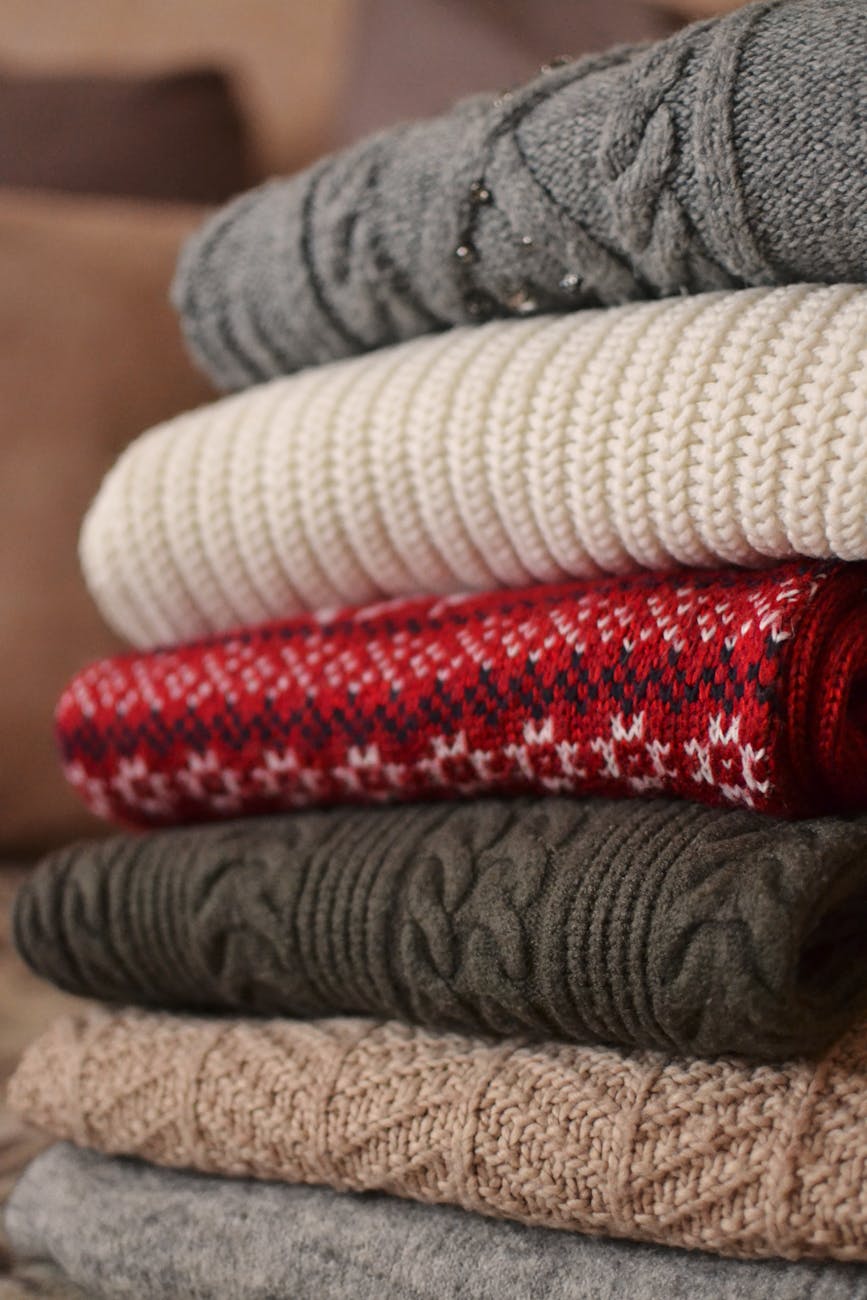
Photo by Emre Akyol on Pexels
Pick the right knit skirt shape
Three skirt shapes carry winter beautifully, and each one asks for a slightly different boot and top.
- Ribbed pencil midi. Long, lean, body-skimming. Best with knee-high boots and a tucked fine-gauge top.
- A-line cable knit. More volume through the hip. Pair with a slim turtleneck and a sleeker boot shaft so the skirt stays the focal point.
- Pleated or fluted knit. Movement and softness. Wear with riding boots and a tucked cashmere-feel sweater to balance the swing.
Hem length matters as much as shape. Aim for the skirt to hit mid-calf or just below, so the boot meets the hem rather than fighting it. Browse cuts and lengths in the knit skirts collection before locking in your formula.
Tights, boots, and the leg line
The leg line is where this outfit lives or dies. Opaque tights and tall boots should read as one continuous column, not three competing pieces. Match tones, or go one shade lighter on the tight than the boot. Avoid sheer hosiery in winter, it breaks the formula and reads underdressed against a heavy knit.
| Tights denier | Warmth | Best for | Pair with |
|---|---|---|---|
| 40 to 60 | Light | Mild winter days, indoor events | Ankle or mid-calf boots |
| 60 to 80 | Medium | Office, dinners, everyday winter | Knee-high riding boots |
| 80 to 100 | Warm | Cold commutes, weekend errands | Tall shaft, lug sole boots |
| 100 plus (fleece-lined) | Heavy | Real cold, outdoor afternoons | Over-the-knee or shearling-lined boots |
Layer the top half without bulk
Once the bottom half is locked in, the top half should stay quiet. The trick is to layer thin to thick from the inside out, so warmth builds without volume.
- Base. A silk or modal long-sleeve tee against the skin. Slim, invisible, and surprisingly warm.
- Mid. A fine-gauge sweater or a fitted turtleneck. Front-tuck or full-tuck depending on the skirt waist.
- Outer. A longline wool coat, a belted wrap coat, or a textured cardigan from the cardigans collection when you want softness instead of structure.
If the skirt is a heavy cable or chunky rib, keep the sweater fine-gauge so the textures do not compete. If the skirt is smooth and slim, you have room to play with a chunkier knit on top. Pull the visual weight to one half of the body, never both.

Photo by Ninari on Pexels
Four outfit formulas, one skirt
Here is how one good knit midi can carry four different days.
- Office. Charcoal ribbed midi, 80 denier black tights, black knee-high boots, ivory fine-gauge turtleneck, camel longline coat.
- Weekend lunch. Cream cable midi, chocolate 60 denier tights, brown riding boots, soft caramel cardigan, leather crossbody.
- Dinner. Black pleated knit midi, sheer-look 60 denier opaque, black over-the-knee boots, fitted black turtleneck, silver hoops.
- Travel day. Navy knit midi, navy fleece-lined tights, lug-sole tall boots, ribbed top, structured wool coat, oversized scarf.
Notice the pattern. The skirt and top sit in the same colour family. The boot and tight match each other. The coat does the contrast. Three tones, never more, and the outfit reads expensive even on a Tuesday.
Common mistakes to skip
- Sheer tights with a heavy knit. Reads cold and incomplete.
- Ankle boots with a midi. Cuts the leg at the widest point.
- Matching the coat to the skirt exactly. Looks like a uniform, not an outfit.
- Untucked sweater over a pencil knit skirt. Loses the waist and flattens the line.
- Black skirt, black tight, brown boot. Pick a lane on the warm or cool side.
Winter dressing is mostly about restraint. Get the formula right once, and a knit skirt becomes one of the hardest-working pieces in the wardrobe. Browse the skirts and the autumn and winter knits to build your version of it.
Frequently Asked Questions
What tights work best with a knit skirt in winter?
Opaque tights in 60 to 100 denier are the sweet spot. They add warmth, smooth the leg line, and read polished. Stick to black, charcoal, chocolate, or deep navy to keep the outfit grounded.
Should tall boots go over or under a knit skirt?
Under. A midi or maxi knit skirt should skim the boot shaft or hover an inch above it. Knee-high or over-the-knee boots worn under the hem keep proportions clean and elongate the leg.
Can you wear a knit skirt to the office in winter?
Yes. Pair a ribbed midi skirt with opaque tights, riding boots, a fine-gauge sweater tucked at the front, and a longline coat. Neutral tones and clean lines keep it boardroom appropriate.
What top goes with a knit skirt and tall boots?
A fitted fine-gauge sweater, a tucked cashmere-feel turtleneck, or a tailored shirt under a cardigan. Keep the top slim where the skirt is full, and longline where the skirt is fitted.
How do you stop a knit skirt from clinging to tights?
Spritz the inside of the skirt with anti-static spray, or layer a silky half-slip between the tights and skirt. A light dusting of talc on the tights also breaks the static cling.
What length knit skirt works best in winter?
Midi length, typically hitting between the knee and mid-calf, is the most versatile winter option. It sits within the warmth zone covered by knee-high boots, pairs naturally with opaque tights, and reads polished across casual and office contexts. Maxi-length knit skirts work well with ankle boots and a longline coat when the weather drops below freezing. Mini knit skirts require more effort in winter: thermal tights, chelsea or ankle boots, and an oversized top to rebalance proportions. For most wardrobes, midi is the no-fail starting point.
Can you wear a knit skirt with trainers in winter?
Yes, with the right proportions. A ribbed or waffle-knit midi skirt works with chunky-sole trainers when the top half stays streamlined: a fitted fine-gauge jumper or a longline coat zipped most of the way. The trainer reads intentional rather than lazy when the rest of the outfit has clean lines. Avoid pairing trainers with a heavily textured or floor-length skirt, where the sole can look undersized and the silhouette reads unresolved.
How do you wash a knit skirt without shrinking it?
Turn the skirt inside out, select the wool or delicate cycle (30 degrees celsius maximum), and use a detergent formulated for knitwear. Never wring or twist: lay the skirt flat on a clean towel, roll the towel to absorb moisture, then reshape and dry horizontally on a drying rack. Hanging a wet knit skirt will stretch the waistband and distort the hem. For ribbed or cable-knit skirts, smooth the ribs into place while the garment is still damp to preserve the texture structure.
What jacket goes over a knit skirt in winter?
A knee-length or longline coat is the most flattering outer layer: it echoes the midi-length proportions and prevents the silhouette from being cut in half at the waist. Leather and faux-leather jackets work well with fine-gauge knit skirts for a contrast in texture. Avoid cropped puffer jackets over midi knit skirts as they interrupt the vertical line. A belted wrap coat over a full-length ribbed skirt is a complete winter outfit with minimal effort.
Which knit skirt textures work best in winter?
Ribbed and cable-knit textures are the most practical for winter: the construction adds slight structure that helps the skirt hold its shape against layers and coats without clinging. Waffle-knit and bouclé textures read slightly more casual and work better in weekend or creative work settings. Fine jersey-knit skirts are the most versatile but offer the least warmth. For the coldest days, a heavier gauge ribbed skirt in merino or a merino blend provides genuine thermal benefit alongside the textural interest. Avoid very open-weave or crochet constructions in winter unless layered over full-length thermal tights.
Featured from this guideShop the pieces.
-
How to Style a Knit Skirt by Length in Winter
Length changes the equation entirely. A mini knit skirt, especially one in a ribbed or waffle construction, pairs with opaque 80-denier tights and a longline coat that grazes the knee. The skirt disappears into the layering, and that tension between abbreviated hemline and enveloping outerwear is where the interest lives. A midi skirt, whether in a cable-knit or smooth interlock, is the most forgiving length for winter styling: it covers enough to stay warm, and the hemline naturally balances a cropped or hip-length top. Tuck a fine-gauge turtleneck in, or let a slightly oversized rib-knit top skim the waistband. A maxi knit skirt is the most sculptural option. Floor-length ribbed knits move like a column and require almost nothing above: a fitted top, a simple boot at the ankle, and the silhouette is complete. With maxi length, the knit construction carries the look, so choose something with visible texture.
The Boot Formula for Knit Skirts
Boots are the primary winter pairing for knit skirts, and the proportions matter more than the style. Ankle boots work with midi and maxi lengths by creating a defined break between skirt and shoe, particularly effective with a slight heel. Knee-high boots are the natural companion for a mini or above-the-knee knit skirt: they close the gap between hem and boot shaft, keeping warmth and proportion both intact. Over-the-knee boots follow the same logic, though the silhouette is more deliberate. Pair them with a relaxed, slightly heavier knit skirt in a waffle or bouclé weave rather than a clingy ribbed cut, which can read as too uniform in texture from boot to waist.
Knit Skirt vs Knit Dress in Winter: When to Choose Each
A knit dress is one piece with no decisions to make at the waist, which is an advantage when warmth and ease are the priority. A knit skirt, on the other hand, lets you control the temperature layer by layer, which matters when you move between a cold street and a heated room. Knit skirts also let you introduce contrast: a different knit construction on top, a woven coat, a fitted turtleneck. If you want a polished, minimal silhouette with no interruption at the waist, choose the dress. If you want to build an outfit with some layering logic and texture play, the skirt is the more versatile call.
Frequently Asked Questions
- Can you wear a knit skirt without tights in winter?
- In mild winter temperatures, yes, particularly with midi or maxi lengths where the skirt itself provides meaningful coverage. A heavier gauge knit, such as a 7-gauge ribbed construction, retains warmth better than a finer-knit skirt. In colder climates, sheer tights are rarely enough: 60 to 80 denier opaque tights are the practical minimum.
- What is the warmest knit skirt construction?
- A chunky cable-knit or waffle-knit skirt in a mid-gauge, around 5 to 7 gauge, traps air between the stitches and insulates better than a flat, fine-gauge interlock. The construction matters as much as the fiber: a loosely woven acrylic reads cold even in bulk, while a compact ribbed wool at the same weight retains heat well.
- How do you style a knit pencil skirt for the office in winter?
- A fine-gauge ribbed pencil skirt in a neutral, such as oatmeal, charcoal, or navy, pairs well with a pressed shirt tucked in at the waist, or a tailored blazer worn over a simple knit top. Knee-high boots or block-heeled ankle boots keep the look grounded.
- Do knit skirts need a slip underneath?
- A fine-gauge ribbed or open-stitch knit skirt will cling and may be partially transparent without a slip. A half-slip in a neutral tone resolves both issues. Heavier constructions in waffle or cable knit are dense enough that a slip is optional, though one still helps the skirt hang cleanly rather than riding up.
Céleste One-Shoulder Midi Dress
Shop now -
Margaux Button-Front Knit Cardigan
Shop now -
Colette Off-Shoulder Cable-Knit Sweater
Shop now -
Sophie Cable-Knit Crewneck Sweater
Shop now -
Marine U-Neck Dress
Shop now
Featured
Édith Jacquard Knit Skirt
Tonal jacquard pattern on a structured knit body. Midi length, clean hem. Pairs with tucked-in ribbed knit or a simple crew neck.
Shop now