
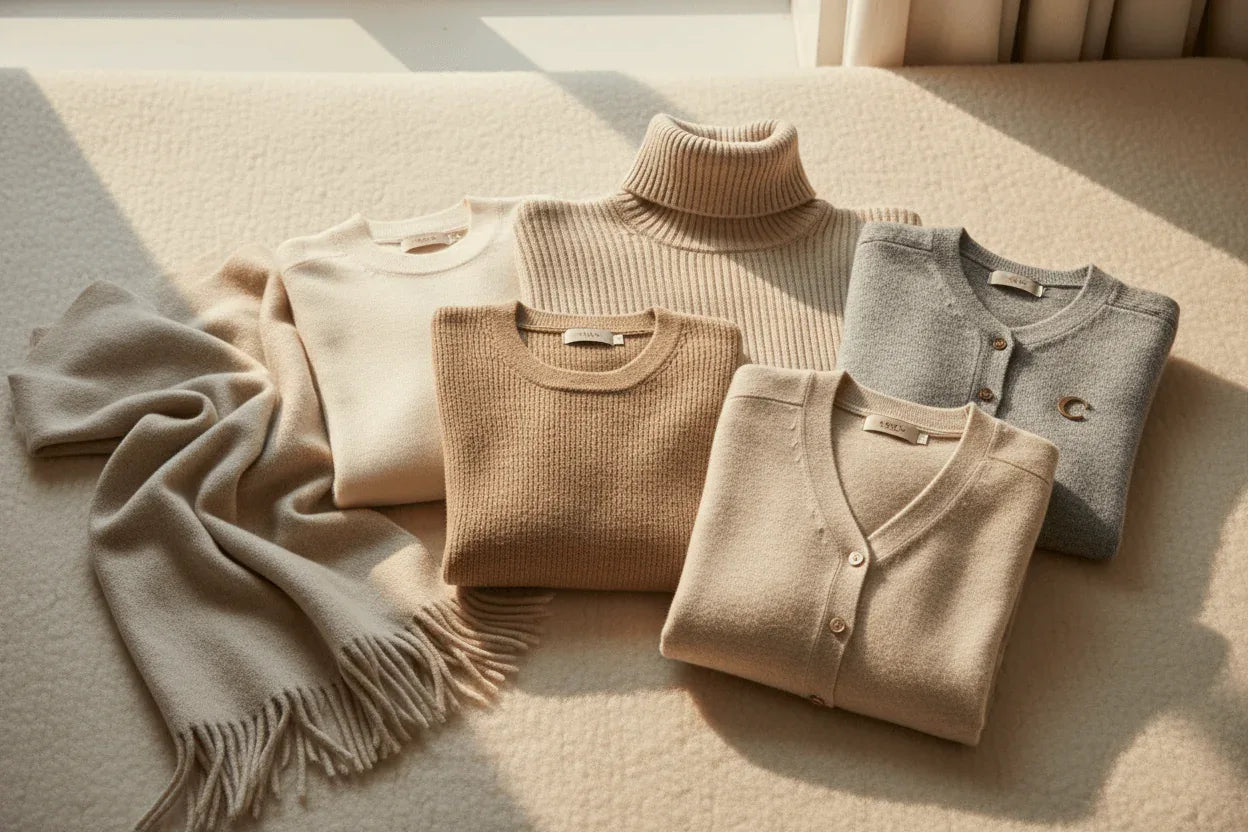

Article: The Art of Knitwear: How to Care for Your Luxury Pieces

The Art of Knitwear: How to Care for Your Luxury Pieces
Luxury knitwear is an investment in your wardrobe, and with the right care, your favorite knit pieces can last for years. Whether you own cashmere sweaters, merino cardigans, or ribbed knit dresses, proper maintenance preserves both the softness and the shape of each garment. Here is everything you need to know about caring for your luxury knitwear. For a structured, step-by-step approach, see our complete knitwear care guide.
Washing Your Knitwear
The golden rule of knitwear care: always hand wash when possible. Fill a basin with cool or lukewarm water and add a small amount of gentle detergent or dedicated wool wash. Submerge the garment and gently press it through the water without wringing, twisting, or rubbing. Let it soak for 10 to 15 minutes, then rinse thoroughly with clean water until all soap is removed.
If you must use a washing machine, place your knitwear in a mesh laundry bag and select the delicate or wool cycle with cold water. Always use a gentle, pH-neutral detergent. Avoid regular detergent, fabric softener, and bleach, as these can break down the fibers over time.
Drying and Storage
Never tumble dry or hang your knitwear to dry. The weight of the wet fabric will stretch the garment out of shape. Instead, lay the piece flat on a clean, dry towel. Gently reshape it to its original dimensions and allow it to air dry away from direct sunlight and heat sources.
For storage, fold your knitwear rather than hanging it. Hanging causes shoulder bumps and stretching, especially on heavier pieces. Store folded items in a cool, dry drawer or on a shelf. For seasonal storage, use breathable cotton storage bags rather than plastic, which can trap moisture.
Dealing with Pilling
Pilling is a natural occurrence with knit fabrics, particularly in areas of friction like the underarms and sides. It is not a sign of poor quality. In fact, natural fibers tend to pill more initially before settling. Use a fabric shaver or a fine-toothed sweater comb to gently remove pills. Work in one direction with light pressure, and your knitwear will look refreshed.
Removing Wrinkles
If your knitwear develops wrinkles, avoid using a hot iron directly on the fabric. Instead, use a garment steamer held a few inches away from the surface. Alternatively, you can place a damp cloth over the garment and press gently with a cool iron. The steam will relax the fibers without damaging them.
Stain Treatment
For small stains, act quickly. Blot (do not rub) the stain with a clean, damp cloth. For oil-based stains, a small amount of dish soap applied directly to the spot before washing can help. For stubborn stains on delicate fibers like cashmere, consider professional dry cleaning rather than aggressive home treatment.
Seasonal Rotation
Rotating your knitwear throughout the season gives each piece time to rest and recover its shape between wears. Avoid wearing the same knit garment on consecutive days. This small habit significantly extends the life of your collection.
With these simple care practices, your luxury knit sweaters, cardigans, and dresses will maintain their softness, shape, and beauty for seasons to come. Explore the full ELNOVE collection to find your next favorite piece.
Shop Related Styles
- Céleste One-Shoulder Midi Dress
- Marguerite Floral Jacquard Knit Cardigan
- Paulette Feather-Trim Knit Cardigan
- Madeleine Turtleneck Knit Midi Dress
- Joséphine Cable-Knit Turtleneck Sweater
For outfit ideas and care advice specific to feather-trimmed knitwear, see our feather trim cardigan style guide.
Frequently Asked Questions
Frequently Asked Questions
How often should you wash luxury knitwear?
Far less often than most people think. A quality wool or cashmere sweater worn over a base layer can go three to five wears between washes (for guidance on choosing the right base layer, see our complete layering guide). Wool fibres have natural antibacterial and odour-resistant properties. Between wears, air the garment on a flat surface for at least 30 minutes to let fibres breathe and release light odours. Spot-treat marks as they happen rather than washing the whole piece unnecessarily. Over-washing breaks down the fibre structure faster than any amount of careful wearing.
Is it safe to steam luxury knitwear?
Yes, and steaming is often preferable to ironing. Hold the steamer 3 to 5 centimetres from the fabric and move it in slow horizontal passes. Do not press the steamer directly onto the knit. Steaming relaxes fibres, removes light creasing, and can revive a pilled or compressed texture. Never steam in a downward direction on a hanging garment, which can stretch the knit under the weight of absorbed moisture. Lay flat or use a seam-forward steam direction instead.
What causes knitwear to pill and how do you prevent it?
Pilling is caused by friction between fibres. Areas where a bag strap, seatbelt, or desk surface rubs against the knit are most vulnerable. To reduce pilling: wash the garment inside out, use a mesh laundry bag, and choose low-spin cycles. A cashmere or wool comb removes existing pills without damaging the base fabric, a far better solution than cutting them off. Short-staple fibres pill more than long-staple ones, which is one reason construction gauge and fibre quality matter at purchase.
How do you store knitwear over summer?
Wash or dry-clean before storage to remove any trace of body oils or food residue, which attract moths. Fold and store flat in a breathable cotton bag or a sealed container with cedar blocks or lavender sachets. Never use plastic bags, which trap moisture and invite mildew. Check stored pieces once mid-summer for any moth activity, particularly if storing wool or cashmere. Reactivate cedar blocks each season by sanding lightly with fine sandpaper to release fresh scent.
Featured from this guideShop the pieces.
-
Caring for Specific Knit Constructions
Different knit constructions respond differently to washing and handling. Cable-knit pieces have raised, twisted stitch panels that can compress and lose definition if wrung or rubbed. Wash them inside out in cool water, and when wet, never hang them as the cables will pull. Lay flat to dry with the cables gently re-shaped by hand. Waffle-knit relies on its grid texture for both its look and its insulating ability: harsh detergents or hot water can mat the squares flat and the structure will not recover fully. Use a wool-specific detergent and cool water, and reshape the waffle grid while damp. Ribbed knits are more elastic and resilient, but the rib channels can distort permanently if the piece is dried on a hanger. Lay flat, always. Bouclé is the most delicate of the four: the looped or curled yarn catches on rough surfaces and snags easily. Wash bouclé in a mesh laundry bag, handle it as little as possible when wet, and keep it away from hook-and-loop fasteners in storage.
Seasonal Storage: What to Do When You Put Knitwear Away
When the season ends, do not put knitwear away dirty. Body oils and perfume residue are invisible but they attract moths and cause fiber degradation over months. Wash or dry-clean each piece before storage. Once clean and fully dry, fold knitwear rather than hanging it. Even a well-shaped hanger will distort a knit shoulder over several months. Store folded pieces in breathable cotton or linen bags rather than plastic, which traps humidity and can cause mildew in warm storage conditions. For wool and cashmere, add cedar blocks or lavender sachets near the pieces, not touching them directly, as deterrents against moth damage. Keep stored knitwear in a cool, dark location: UV exposure fades color and weakens fiber over time.
Frequently Asked Questions
- How often should you wash a knit sweater?
- For most knitwear, every three to five wears is a reasonable interval, provided you are not wearing it directly against skin for extended periods. Wool and cashmere are naturally odor-resistant and do not need frequent washing. Over-washing breaks down the fiber structure and contributes to pilling. Airing a sweater after each wear, laid flat rather than hung, keeps it fresh between washes.
- Can you use a regular tumble dryer for knitwear?
- No. Heat shrinks protein fibers such as wool, cashmere, and merino irreversibly, and the mechanical agitation of a dryer distorts the knit structure. Even a low-heat or delicate cycle carries real risk. Lay knitwear flat on a clean towel or a mesh drying rack, reshape it while damp, and let it air dry away from direct heat or sunlight.
- What causes pilling and how do you remove it?
- Pilling happens when short fibers on the surface of the yarn tangle into small balls under friction, typically at points of wear such as underarms, cuffs, and the sides of a torso. A fabric shaver, used on a low setting in slow, circular passes across a flat surface, removes pills cleanly without thinning the fabric.
- Is it safe to steam knitwear?
- Yes, steaming is the preferred method for refreshing and de-wrinkling knitwear. Hold the steamer head a few centimetres from the surface and let the steam penetrate without pressing the iron flat against the knit. Direct contact with a hot iron plate compresses the stitch structure.
Céleste One-Shoulder Midi Dress
Shop now -
Margaux Button-Front Knit Cardigan
Shop now -
Colette Off-Shoulder Cable-Knit Sweater
Shop now -
Sophie Cable-Knit Crewneck Sweater
Shop now -
Marine U-Neck Dress
Shop now
Building a Care Kit for Your Knitwear
The right tools make the difference between knitwear that holds its quality for a decade and knitwear that deteriorates after a season. Four items cover most care needs for a natural fibre wardrobe.
Fabric shaver
A fabric shaver removes surface pills cleanly without pulling threads. Run it lightly across the pilled area in small circular motions. The blade should never press hard against the fabric: the goal is to sever the pill at its base, not abrade the knit surface. Most fabric shavers have adjustable depth settings; start at the coarsest guard and only go finer if pills are not being captured. Replace the blade head regularly: a dull shaver tears the fibre rather than cutting it.
Mesh laundry bag
A mesh bag protects fine-gauge knitwear in the washing machine by preventing it from snagging on other items or tumbling against the drum. Use one bag per sweater. The bag should be large enough that the garment sits folded inside it rather than compressed. A bag too small will prevent the fabric from moving freely in the water and reduce cleaning effectiveness.
Cedar blocks or lavender sachets
Both act as natural moth deterrents for stored natural fibre. Cedar loses its scent over time; sand the surface lightly with fine sandpaper every few months to refresh it. Replace lavender sachets each season. Neither should touch the fabric directly: wrap in muslin or keep in a separate section of the drawer. Chemical mothballs are effective but leave a persistent odour that is difficult to remove from natural fibre.
Garment steamer
A handheld steamer removes wrinkles from knitwear without the contact pressure of an iron. Hold the steamer head a few centimetres from the surface and let the steam relax the fibres. Work from the seams outward. Steaming also refreshes a garment that has been stored flat: the moisture rehydrates natural fibres that have dried out over weeks in a drawer.
Care by Knit Construction
Different knit constructions have different vulnerabilities in washing, drying, and storage. Knowing the construction type of each piece allows you to adjust your care approach accordingly.
Fine-gauge knits (below 12 stitches per inch) have the least structural resistance of any knit fabric. The individual yarns are thin and the fabric has significant drape. Fine-gauge pieces should always be hand washed or placed in a mesh bag on a cold delicate cycle. They are the most likely to distort during machine washing if unsupported. Lay flat to dry in their original dimensions.
Cable-knit constructions are denser and more structurally robust than fine-gauge, but the raised cable columns are vulnerable to distortion if the fabric is wrung or twisted when wet. The weight of a saturated cable sweater is considerable: always support the full weight when lifting from the wash basin to avoid stressing the shoulder seams. Press the water out between towels rather than lifting and squeezing from a single point.
Waffle-knit construction depends on the integrity of its raised grid structure. Washing in hot water or machine drying at any heat can collapse the grid permanently. Cold water hand wash or cold delicate cycle, followed by flat drying, preserves the grid. Avoid stacking other items on top of a damp waffle-knit piece as the weight compresses the raised squares while the fabric is in its most vulnerable state.

