
How to Dry a Knit Sweater Without Stretching It Out
Short answer: A wet knit is its own worst enemy. Water adds weight to every loop of the construction, and that weight pulls the garment out of shape before it can dry. How to dry a knit sweater without stretching comes down to two things: a towel roll to remove.
A wet knit is its own worst enemy. Water adds weight to every loop of the construction, and that weight pulls the garment out of shape before it can dry. How to dry a knit sweater without stretching comes down to two things: a towel roll to remove most of the moisture, then flat drying to finish. No heat, no hanging, no lost shape.
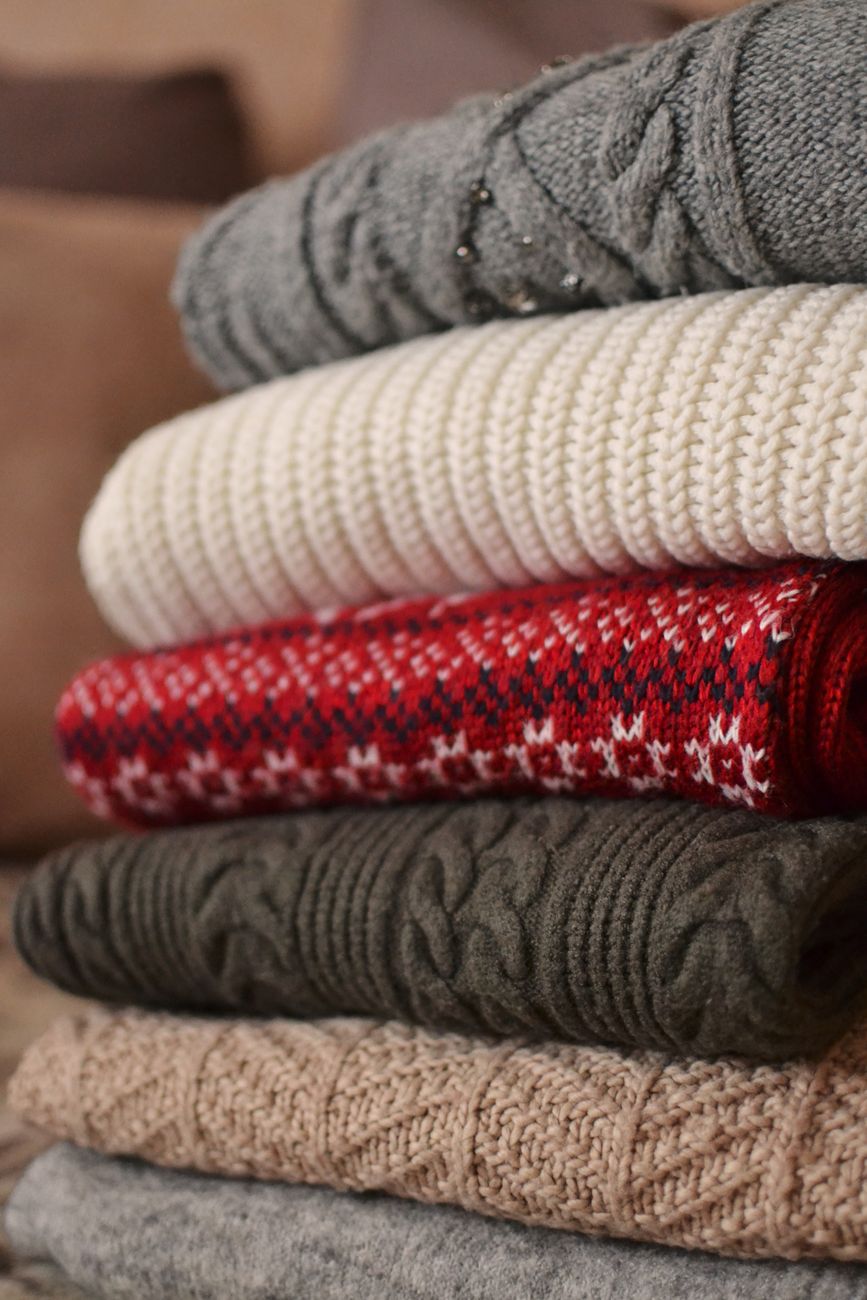
Photo by Darya Grey_Owl on Pexels
The Towel-Roll Method: How to Dry a Knit Sweater Without Stretching
After washing, do not wring, twist, or hang. Lay the wet sweater flat on a clean dry towel. Roll them together into a loose cylinder, then press firmly along its length. Unroll, transfer to a fresh towel or mesh rack, reshape to original dimensions, and leave to air dry flat. The whole process takes under five minutes.
Here is the step-by-step breakdown:
- Lay a clean bath towel flat on a table or on the floor.
- Place the sweater on the towel. Smooth it gently into its natural shape without pulling or stretching.
- Roll them together from one short end, forming a loose, even cylinder.
- Press firmly along the roll. Use both hands. Press, do not twist. The towel draws moisture out of the knit without stressing the construction.
- Unroll carefully. The sweater will feel damp but no longer dripping. For a full guide to washing, storage, and seasonal care, see The Art of Knitwear: How to Care for Your Luxury Pieces.
- Transfer to a dry towel or mesh drying rack. Lay flat. Realign the neckline, side seams, and hem to their intended dimensions.
- Air dry at room temperature, away from direct sunlight and radiators. A fan on a low setting cuts drying time significantly.
If the garment is still very wet after one roll, repeat with a second towel before laying flat.
Why Hanging a Wet Knit Always Goes Wrong
Knitwear is built from interlocked loops. That structure is what gives it stretch, drape, and recovery. The same loops that move beautifully dry will distort badly when saturated.
Water adds significant weight to a garment. When hung from a shoulder seam, all that weight pulls downward. A 7-gauge cable knit can stretch several centimetres in length before it is even half dry. Once the fibres have dried in a distorted position, they stay there.
Heat creates a different problem. Machine dryers use tumbling and elevated temperature to evaporate moisture. For knitwear, this means loops shrink unevenly, seams pucker, and ribbed cuffs lose their elasticity. One dryer cycle can permanently damage a construction that would otherwise last for years.
Flat drying distributes weight evenly across the whole garment. No single point bears the load. The loops stay in the position they were knit, and the shape stays exactly as it should.
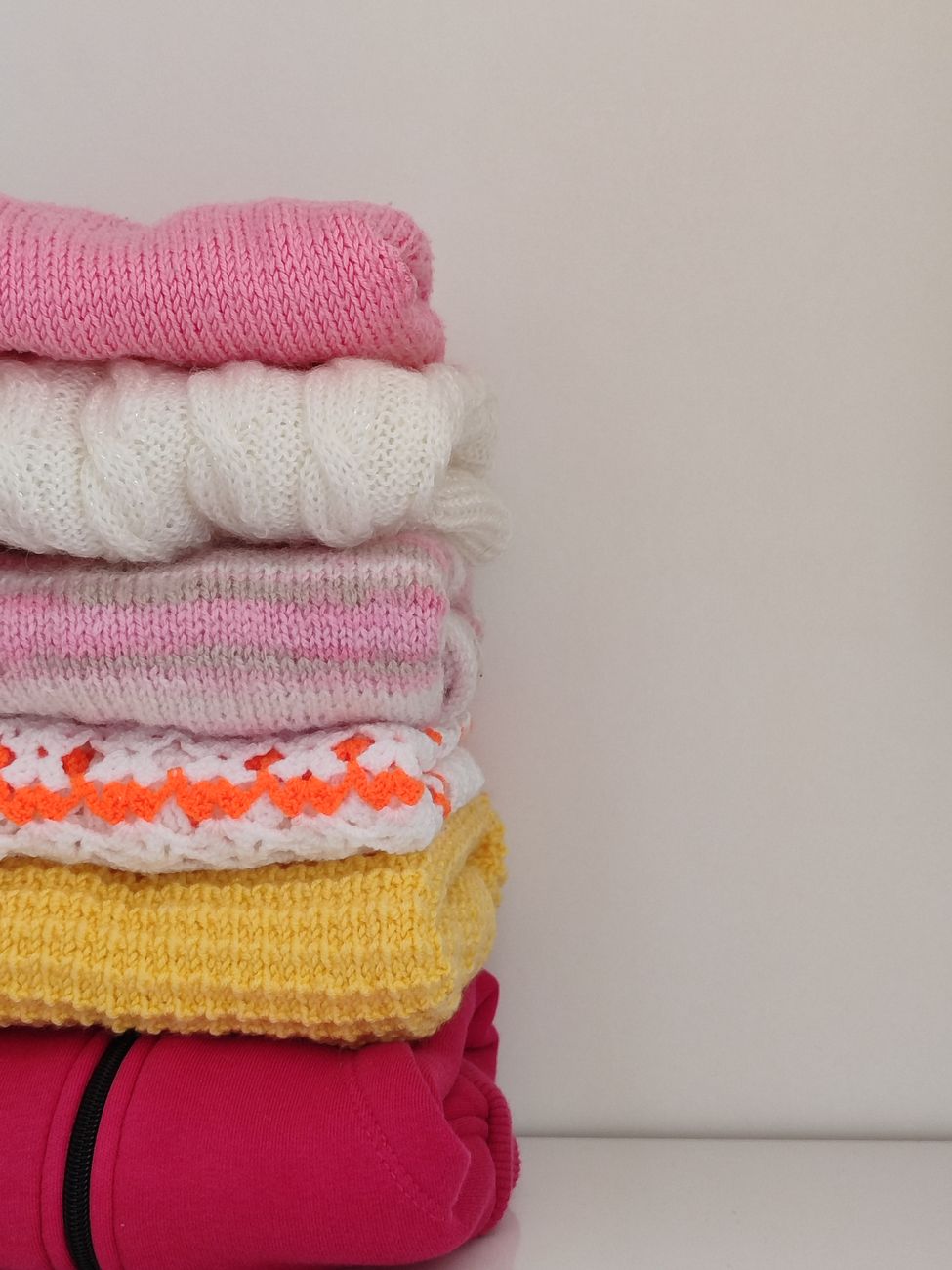
Photo by Nur Tok on Pexels
Drying Methods Compared
Not all drying approaches carry the same risk. This table shows how common methods affect different knitwear constructions.
| Method | Shape Risk | Fibre Risk | Verdict |
|---|---|---|---|
| Tumble dryer (heated) | Medium | High: shrinkage and pilling | Avoid for all knitwear |
| Hanging wet on a hanger | Very high: shoulder and length stretch | Low | Never for knitwear |
| Flat dry only (no towel roll) | Low | Low | Fine for lightweight open-knit pieces |
| Towel roll + flat dry | Very low | Very low | Best method for all constructions |
| Dryer on air-fluff (no heat) | Medium | Low | Only as a brief finishing step |
How Long Does Flat Drying Take by Construction?
Drying time depends on the weight and density of the construction, room humidity, and airflow. These are realistic estimates in a normally ventilated room:
| Construction | Approximate Drying Time |
|---|---|
| Fine rib or openwork | 4-6 hours |
| Waffle knit | 5-8 hours |
| Mid-weight ribbed | 6-10 hours |
| Cable knit or textured | 10-16 hours |
| Bouclé or heavily structured | 12-24 hours |
A mesh drying rack reduces time by roughly a third compared to a solid surface, because air circulates underneath the garment as well as above it.
Avoid placing a damp knit near a radiator or using a hair dryer on it. Localised heat causes uneven drying. Seams pucker and ribs lose their definition even when the rest of the garment looks fine. Patience is part of the method.
Photo by Kate L on Pexels
What to Check While Your Knit Dries
A well-dried knit looks like the original garment within the first couple of hours. Check these points once an hour until fully dry:
- The neckline sits at its intended width, not pulled wide or bunched inward.
- Side seams are straight and lie flat, not curling forward or backward.
- Hem length is even all the way around.
- Ribbed cuffs and waistbands show clear definition and spring back when pressed.
If something looks off, ease the piece gently back into shape while it is still damp. Once the knit has dried fully, any distortion is set permanently. A few seconds of attention mid-dry is far easier than trying to correct a finished garment.
The pieces worth drying carefully are the ones worth keeping. Every knit in our best-sellers collection is built to last, and the towel-roll method is what makes that longevity real. Browse our sweaters and knit sets, knowing that with two minutes of the right technique after every wash, the shape, drape, and construction stay exactly as they were meant to be.
Frequently Asked Questions
Can I put a knit sweater in the dryer?
No. Heat and tumbling cause irreversible shrinkage and pilling. Always use the towel-roll method to remove excess moisture, then dry flat at room temperature.
Why does my sweater stretch when I hang it to dry?
Wet fibres are heavy. Hanging concentrates that weight on the shoulder seams, pulling the knit downward as it dries. Flat drying distributes weight evenly and prevents distortion.
How long does a knit sweater take to dry flat?
Fine ribs and openwork dry in 4-6 hours. Waffle knits need 5-8 hours. Heavy cable or bouclé constructions can take 12-24 hours. Good airflow speeds the process.
Does the towel-roll method work for all knitwear?
Yes. It works for waffle, cable, ribbed, bouclé, and openwork constructions. Always check the care label before washing, and never wring or twist the garment.
How do I reshape a knit sweater while it dries?
While still damp, gently ease the piece back to its original dimensions on a flat surface. Smooth seams flat, pull the neckline to its intended width, and align the hem.
Featured from this guide
Shop the pieces.
Dealing with Mishaps: What to Do When Things Go Wrong
Even with proper technique, washing and drying knits occasionally produces an unexpected result. Knowing how to recover from the most common mishaps means a single mistake does not have to end a garment's useful life.
If the sweater stretched during washing: Do not dry it in the stretched state. While the piece is still damp, gently compress the fabric back toward the original dimensions. Work from the hem upward, easing the fabric in toward the centre rather than pulling it from the edges. Lay it flat on a towel and pat it into the correct shape before leaving it to dry completely. For significant distortion in a wool or natural-fibre piece, a steam treatment while the garment is damp can help: hold a steamer approximately 10 centimetres above the surface and let the steam relax the fibres before re-blocking.
If the sweater felted or shrank: This is the hardest mishap to reverse and in some cases it is irreversible. If the shrinkage is minor (less than a full size), the piece can sometimes be stretched back while damp. Soak the piece in cold water for 20 to 30 minutes, remove it without wringing, and then gently stretch it on a flat surface back toward its original dimensions, pinning or weighting the hem and cuffs if necessary. This works most reliably on wool and wool-blend pieces. If the piece has fully felted (the knit structure is no longer visible and the fabric is dense and stiff), the stitches have been irreversibly matted and the piece cannot be restored.
If the sweater dried unevenly: A section that dried faster than the rest (perhaps because one end was closer to a heat source) will often show a visible line of compression or lighter colour when dry. The fix is to re-dampen the affected area with a spray bottle, ease the fabric back into alignment with your hands, and let it dry again evenly away from any heat source. This does not work once the distortion has been set by heat, so address it as soon as you notice the uneven drying.
If the sweater has a stubborn fold crease: Place a clean damp cloth over the crease and hold a steam iron a few centimetres above (never touching the knit surface) for 10 to 15 seconds. The steam penetrates through the damp cloth and relaxes the fibre memory without direct heat contact. Remove the cloth and gently smooth the area flat. Let it rest undisturbed until fully dry. For persistent creases in a cable-knit piece, repeat the process twice rather than applying extended steam at once. Pieces like the Solène openwork pullover and the Émeline openwork sweater, with their open-stitch constructions, are particularly responsive to light steam treatment because the open weave allows the steam to penetrate evenly across the panel.
Prevention as the long-term answer: Every mishap above is preventable with consistent handling. Cold water, hand wash or delicate machine cycle, no heat in the spin, immediate reshaping while damp, and flat drying away from sunlight or radiators are the five steps that keep knitwear in its best condition. A sweater handled correctly for its first ten washes builds a care habit that makes long-term garment quality almost effortless to maintain.